

When Is It Worth Investing in an Automated Wrapping Line?
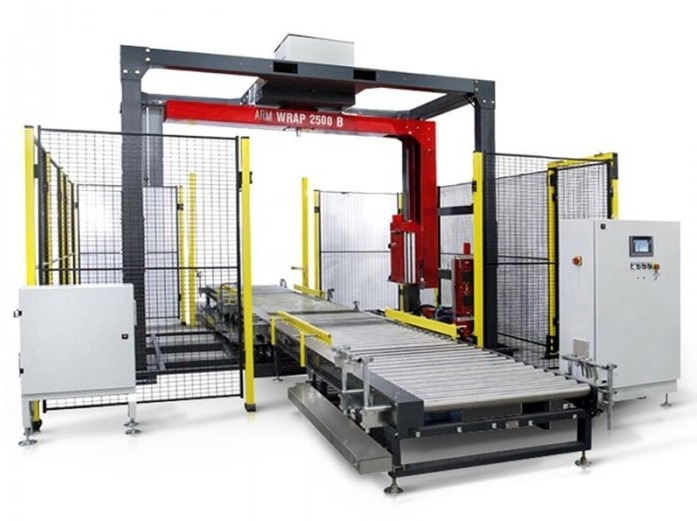
Investing in an automated wrapping line becomes a strategic decision when the volume of goods, logistics requirements and need for efficiency exceed the capacity of manual or semi-automated processes. In the packaging and logistics industry, automating pallet wrapping is no longer just a competitive advantage, but a necessity for companies looking to optimize costs, increase productivity and ensure consistency in deliveries. An automated wrapping line is designed for medium and high-volume operations where stability, speed and process control are essential.
Increased production volume justifies automating the wrapping process
One of the clearest signs that it is worth investing in an automated wrapping line is an increase in production volume. When the number of pallets wrapped each day grows significantly, manual or semi-automated processes become an operational bottleneck. Operators can no longer maintain the required pace, and wrapping times increase.
An automated line eliminates these limitations, enabling continuous and consistent wrapping without relying on human intervention. In practical terms, automated equipment is designed for medium and high-volume production, where the logistics flow must be predictable and stable.
The need to reduce operating costs supports the investment
Labour costs and losses caused by inefficient wrapping can become significant over time. An automated wrapping line reduces the need for operators to be directly involved in the process and optimizes film consumption through pre-stretching systems and automatic control.
As a result, the initial investment is recovered through recurring savings, especially in companies with a constant flow of goods. In addition, automation reduces human error and variations in stretch film, strapping and palletizing, helping to reduce costs caused by product damage during transport.
Standardized wrapping improves delivery quality and safety
Another important reason to invest is the need for consistency in wrapping. In manual processes, film tension and wrapping methods vary from one operator to another. This can lead to unstable pallets and risks during transport.
An automated line ensures consistent parameters for every pallet: the same tension, the same number of layers and the same wrapping sequence. The result is better protection for goods and fewer complaints.
Integration into automated logistics flows increases operational efficiency
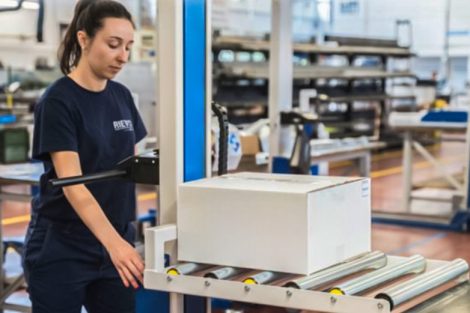
Companies that already use conveyor belts or automated storage systems benefit the most from an automated wrapping line. This equipment can be integrated directly into the existing flow, eliminating additional pallet handling. As a result, the process becomes faster, safer and more efficient through the optimal use of different types of stretch film & accessories. Packaging automation is part of a broader logistics chain optimization system in which each stage is connected and controlled.
The need to increase delivery speed calls for automated solutions
In today’s environment, where delivery times are becoming increasingly shorter, wrapping speed is a critical factor. An automated line enables fast and continuous wrapping without interruptions, helping companies meet delivery deadlines even during busy periods. The use of modern technologies represents a competitive advantage for companies in e-commerce, distribution or industrial manufacturing, where order volumes fluctuate constantly.
Reducing the risk of goods damage protects profits
Incorrect wrapping can cause goods to shift on the pallet and products to be damaged during transport. With an automated system, each pallet is wrapped uniformly and stabilized correctly. This significantly reduces the risk of damage and financial losses. In addition, modern systems include film gripping, cutting and sealing functions, eliminating manual interventions and potential errors.
Business scalability requires automated solutions
As a company grows, its processes must be scalable. Investing in an automated wrapping line enables an increase in wrapping capacity without a proportional rise in staffing costs. This allows the business to handle higher volumes without compromising efficiency. Flexibility is essential for companies planning to expand or optimize their operations.
The difference between automated and semi-automated systems affects the timing of the investment
Semi-automated equipment is an intermediate solution suitable for smaller or moderate volumes. It requires operator intervention and has limitations in terms of speed and efficiency. For example, a semi-automatic palletizer requires direct operation, making it suitable for lower workloads. Switching to an automated line becomes justified when these limitations affect productivity or the logistics flow.
Packaging automation becomes a genuine competitive advantage
In a competitive industrial environment, companies that optimize their internal processes have a clear advantage. Packaging automation means not only efficiency, but also predictability, consistent quality and the ability to respond quickly to market requirements. Providers of complete packaging solutions offer equipment adapted to different operational needs, from manual processes to fully automated lines.
Frequently asked questions about automated wrapping lines
Is investing in an automated wrapping line suitable for every type of business?
Not every business needs an automated wrapping line. This solution is particularly suitable for companies handling medium or large pallet volumes, where wrapping becomes a repetitive process that is critical to the logistics flow. For smaller volumes, semi-automated equipment may be sufficient.
Is the cost of an automated wrapping line recovered quickly?
The payback period depends on production volume and current costs. In general, companies that consistently wrap a large number of pallets achieve savings by reducing film consumption and labour costs, which leads to the investment being recovered over time.
Does the difference between a semi-automatic machine and an automated line affect efficiency?
A semi-automatic machine requires an operator to position the pallet and start the wrapping cycle. By contrast, an automated line operates as part of the integrated logistics flow and can process pallets without human intervention, delivering greater speed and consistency.
Is film consumption optimized by automated systems?
Modern automated lines are equipped with pre-stretching systems for machine stretch film, enabling efficient use of the material. This reduces costs and ensures uniform tension, contributing to pallet stability.
Can an automated wrapping line be integrated into an existing logistics flow?
Automated wrapping lines can be integrated with conveyor belts and other automated systems. This integration reduces manual handling and optimizes the entire packaging and delivery process.
Is long-term maintenance of an automated line manageable?
Although automated equipment is more complex, its maintenance is standardized and predictable. With regular servicing and correct use, it can operate efficiently over the long term without significant unexpected costs.
Does automation reduce the risk of goods damage?
By standardizing the wrapping process, each pallet is wrapped correctly and uniformly. This reduces the risk of goods shifting and being damaged during transport, helping to reduce losses.
Investing in an automated wrapping line becomes justified when production volume increases, operating costs need to be optimized and the safety of goods during transport becomes a priority. Packaging automation brings control, consistency and efficiency, directly contributing to logistics chain performance.
Looking for the right equipment for your business needs? Contact the INATECH Packaging team to benefit from specialist advice and solutions tailored to your operational flow. Explore the equipment range and optimize your packaging process with the help of our specialists.