

Practical Guide: How to Seal a Cardboard Box?
Transport safety starts with how you seal the cardboard box. Whether you are delivering products to customers or storing goods in a warehouse, you need to apply a closure method that protects the contents until they reach their destination. Find out from the INATECH Packaging specialists how to quickly choose the right tape, use a dispenser correctly and seal even fragile parcels, so that every box remains intact throughout the entire journey.
Materials, equipment and accessories from INATECH Packaging for sealing cardboard boxes
Do you want the seal to withstand shocks and handling? Choose materials suited to the load. For most parcels, specialist packaging tape with a width of at least 4.5 cm is highly effective. When shipping sensitive items, choose FRAGILE adhesive tape, which clearly indicates that the package requires careful handling. For example, are you sending a set of ceramic dishes? Apply FRAGILE adhesive tape visibly to every side of the box.
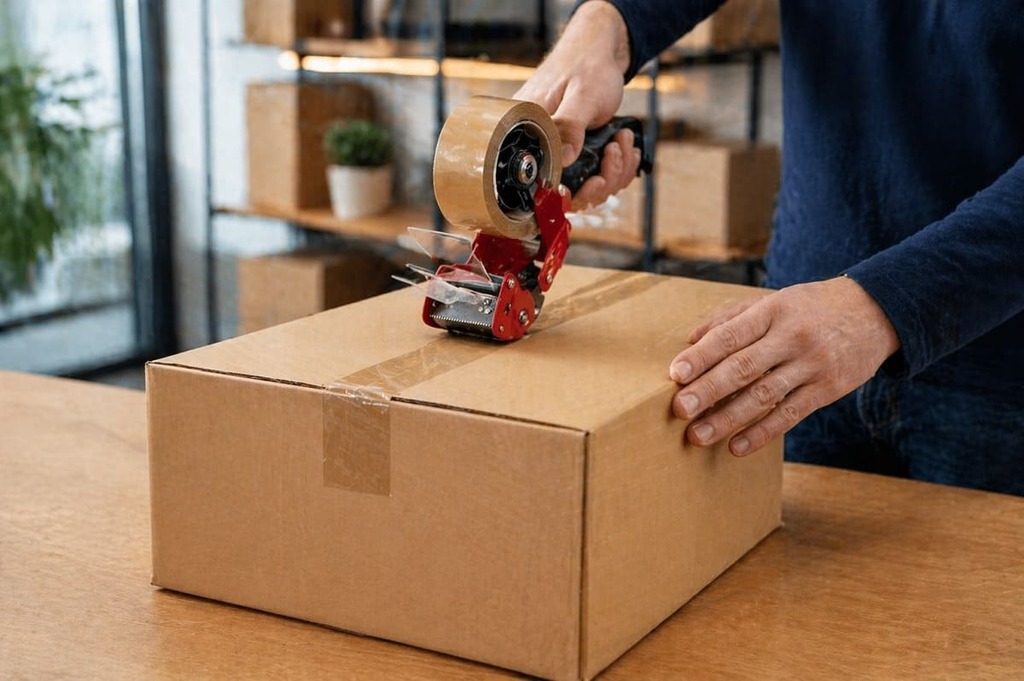
If you are packing bulky boxes, use a manual adhesive tape dispenser to apply the tape in a straight line and reduce waste. In high-intensity work areas, table-mounted devices such as the adhesive tape dispenser with holder shorten processing time on the production line. Environmentally friendly options are also available, such as solvent-based Kraft adhesive tape, which is recyclable and bonds well to cardboard. For heavy parcels or high-volume logistics flows, consider water-activated tape and its dedicated dispenser, which provide a firm bond resistant to moisture.
Do not forget the basic tools: scissors or a sharp-bladed cutter for a straight, quick cut.
Correct assembly of cardboard boxes – professional recommendations from INATECH Packaging
Open the box from its flat form, carefully push out the corners and bring the walls into an upright position. Turn the box upside down and fold the short flaps first, followed by the long ones, forming the bottom closure. Next, place the box on a smooth, dust-free surface so that the tape’s adhesion is not compromised. Check every joint, press the flaps firmly at the corners and make sure there are no gaps between them. If you notice misaligned edges, reposition them before sealing.
The “H” sealing method – the standard for secure packaging
The H sealing method helps you close the box quickly, neatly and securely against accidental opening. This method creates three contact points between the tape and the cardboard, reducing the risk of the box coming apart during transport. Find out how to seal cardboard boxes correctly for secure deliveries! Follow these 5 simple steps:
- Position the box with the bottom facing up, keep the flaps closed and press the panels together;
- Use the dispenser to apply a piece of adhesive tape along the central joint, from one end of the box to the other;
- Apply an additional strip to both edges – where the top meets the sides. This creates an “H”-shaped tape pattern on the box;
- Press by hand or with the dispenser roller to ensure even adhesion; cut the tape at the end using the blade built into the dispenser or a cutter.
- Repeat the procedure on the top flaps after filling the box.
Work with tape at least 4.5 cm wide and avoid leaving air bubbles underneath it. If you apply the tape too tightly, the cardboard may deform. Inspect the tape visually at the end – the “H” method leaves clear marks if someone later tries to open the box.
Other methods for closing light or heavy boxes
For small, lightweight boxes, you can use the “L” product packaging method – the tape covers one corner and provides quick closure. If you need greater stability at the base, use the “U” method: the tape runs along two sides and across the bottom of the box. For large or heavy parcels, combine the “H” method with an additional transverse strip of tape (strapping) to increase resistance to stacking and shocks.
Protecting fragile products transported in cardboard boxes
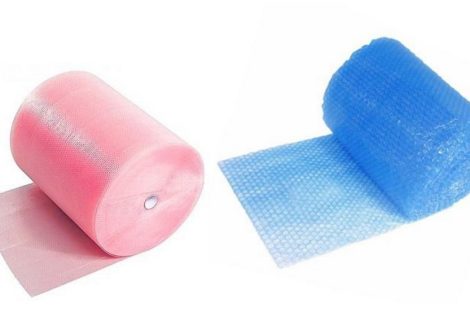
For fragile products or items containing sensitive electronics, start by covering the bottom of the box with bubble wrap or a layer of foam. Fill the remaining spaces with crumpled paper so that the product does not touch the box walls or move during handling. Place the product in the centre and secure it well. Apply FRAGILE adhesive tape visibly so that courier staff can quickly see that extra care is required. For example, are you shipping glassware? Line each corner with bubble wrap and apply FRAGILE tape over all exposed edges.
For professional packaging in high volumes or when transporting extremely sensitive goods, you can double the tape layer or use fibre-reinforced tape. If you use premium adhesive tape, you benefit from a bond that is resistant to shocks and temperature variations.
Correct labelling and informing the recipient
After securing and closing the box, apply clear labels: “Fragile” and “Do Not Turn Over”, and correctly complete the sender’s and recipient’s addresses. Use coloured labels or stickers that are easy for transport and receiving staff to identify.
Frequently asked questions about sealing cardboard boxes
Here is what you need to know about sealing cardboard boxes:
Why is it important to seal a cardboard box correctly?
Correctly sealing a cardboard box protects its contents during transport and storage, preventing accidental opening and product damage.
What type of adhesive tape is recommended for sealing cardboard boxes?
Polypropylene adhesive tape or reinforced tape is recommended for sealing cardboard boxes, depending on the weight and contents of the parcel.
How should a cardboard box be sealed correctly?
The box should be sealed by applying adhesive tape along the joint between the flaps, both on the top and bottom, using the H-shaped technique for increased stability.
Is one strip of adhesive tape enough to close the box?
One strip may be sufficient for lightweight parcels, but for heavy or fragile boxes, additional tape is recommended for safety. Find out how volumetric weight is calculated to choose the best packaging solutions.
What mistakes commonly occur when sealing cardboard boxes?
The most common mistakes include using low-quality tape, applying the tape unevenly or failing to clean the cardboard surface before sealing.
Is it necessary to seal the bottom of the box as well?
Yes, sealing the bottom is essential to prevent the box from opening under the weight of its contents.
What solutions are available for sealing heavy boxes?
For heavy boxes, reinforced adhesive tape, multiple layers of tape and, where necessary, staples or reinforcing straps are recommended.
How does correct sealing affect transport costs?
A correctly sealed box reduces the risk of damage and returns, helping to lower additional transport and handling costs.
Inspect every box after applying the tape. It should adhere completely, with no lifted corners or exposed edges. An adhesive tape dispenser, whether manual or table-mounted, helps you apply tape quickly and without waste.
Invest in quality tape and always adapt the type of tape to the weight of the goods, the transport distances and the specific product. A heavy product or one with sharp edges needs tape with a strong adhesive or reinforced tape, while Kraft tape can be used confidently for eco-friendly parcels.
Correctly sealing boxes starts with choosing the right materials. Contact the INATECH Packaging specialists to find out how to use professional packaging solutions for safety, efficiency and long-term results. Discover INATECH Packaging solutions and order now!