

Thermal Insulated Mailers vs. Insulated Boxes: When to Choose Each for Maximum Efficiency?
If you transport temperature-sensitive products, choosing the right insulated packaging directly affects costs, product safety and the end customer’s experience. A difference of a few degrees or a few extra hours in transit can lead to losses, returns or compliance issues.
You have two commonly used options: thermal insulated mailers and insulated boxes. Both are part of the insulated packaging category and address different needs. In this clear, practical guide, you will learn how each solution works, what advantages and limitations it has, and how to choose the right option for your business, whether you operate in e-commerce, manufacturing, logistics, pharmaceuticals or food.
What Is Insulated Packaging and How Does It Work?
Insulated packaging reduces heat transfer between the inside of the parcel and the external environment. In practice, it slows down thermal exchange and keeps the temperature stable for a controlled period.
Heat transfer occurs through:
- conduction – heat passes through the material;
- convection – warm or cold air circulates inside;
- radiation – thermal energy is transmitted through waves.
Materials such as expanded polystyrene (EPS), aluminium-coated bubble foil or recycled fibres reduce these processes. The greater the thickness and density of the insulating layer, the longer the temperature can be maintained.
In most cases, performance also depends on:
- pre-cooling the product;
- using cold packs or phase change materials (PCM);
- the external temperature;
- the transport duration.
Here you can find more types of solutions adapted for industrial use, with clear technical specifications.
Thermal Insulated Mailers – Definition, Advantages and Limitations
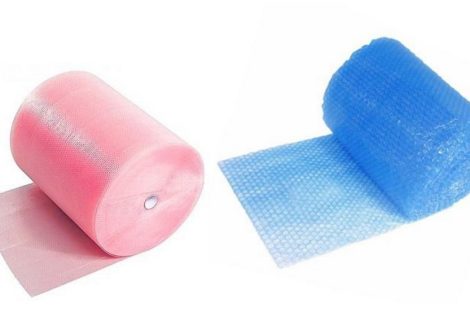
Thermal insulated mailers are lightweight, flexible packaging solutions made from aluminium-coated bubble foil or fibre-based materials. They are mainly used for small and medium-sized products with moderate temperature requirements.
Advantages
Their low weight reduces transport costs, especially if you work with courier companies that calculate rates based on volume. We also recommend analysing the impact of volumetric weight on logistics costs. Thermal insulated mailers:
- take up little warehouse space;
- can be sealed quickly;
- enable efficient processing on packaging lines;
- adapt to products with irregular shapes.
For standard use in local food or pharmaceutical e-commerce, they maintain temperature for between 12 and 48 hours, depending on the configuration.
Limitations
Mechanical protection is limited. If you ship fragile or heavy products, there is a risk of deformation or compression during handling. The temperature-holding period is shorter than with a rigid box. For international transport or periods exceeding 48 hours, performance may not be sufficient.
When to Choose Thermal Insulated Mailers
Use them for:
- small pharmaceutical products (2–8°C);
- supplements or heat-sensitive cosmetics;
- portion-sized food delivered quickly;
- laboratory samples.
If you deliver within 24 hours and effectively control the logistics chain, mailers offer an attractive price-to-performance ratio and high operational efficiency.
Insulated Boxes – Definition, Advantages and Limitations
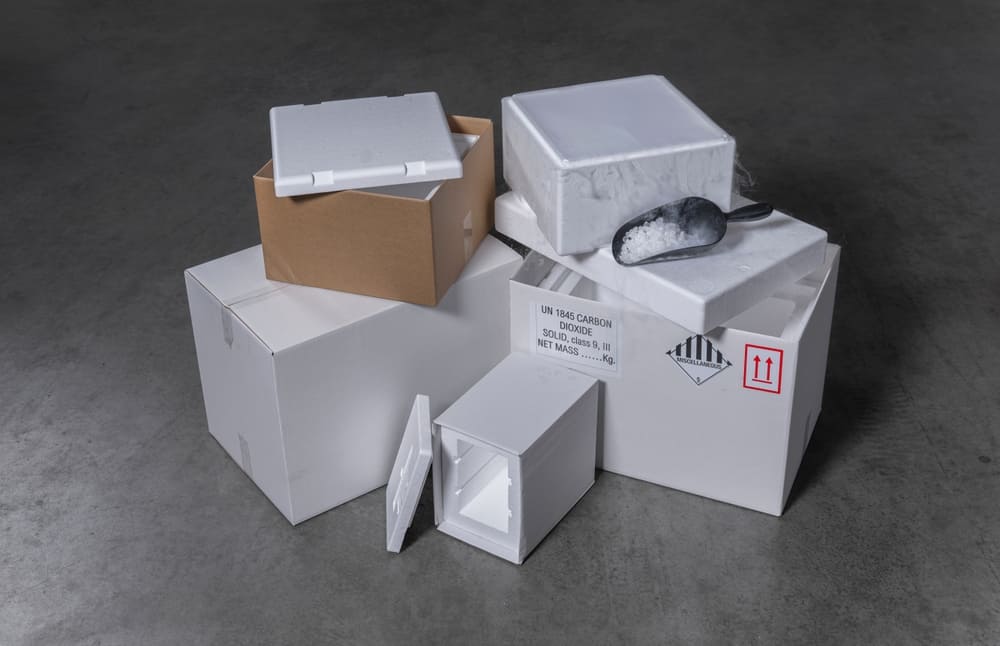
Insulated boxes are rigid packaging solutions made from expanded polystyrene (EPS), cardboard with insulating inserts or other high-density materials. They provide both thermal protection and superior mechanical resistance.
Advantages
Insulated boxes:
- maintain temperature for between 24 and 120 hours, depending on the configuration;
- resist shocks and compression;
- allow the use of gel packs, eutectic plates or dry ice;
- are suitable for B2B transport and long routes.
In the pharmaceutical or food industries, where standards are strict, boxes help maintain compliance with safety and hygiene requirements.
Limitations
They take up more warehouse space and are heavier. The cost per unit is higher than that of thermal insulated mailers. If the shipment is short and the product does not require intensive protection, the investment may not be justified.
When to Choose Insulated Boxes
They are suitable for:
- frozen products below -18°C;
- international transport;
- national distribution over long distances;
- bulky or high-value products;
- situations involving extreme external temperatures.
If you operate in the pharmaceutical, automotive, electronics or food industry and need predictable thermal stability, insulated boxes deliver consistent results.
Direct Comparison by Relevant Criteria
Thermal Performance
- Mailers: 12–48 hours, suitable for fast deliveries;
- Boxes: 24–120 hours, suitable for long distances.
Mechanical Protection
- Mailers: low level, for lightweight products;
- Boxes: high level, for fragile or heavy products.
Logistics Cost
- Mailers: low weight and reduced volume;
- Boxes: greater weight, but a lower risk of damage.
Storage Space
- Mailers: take up minimal space;
- Boxes: require dedicated space.
The choice depends on the product, transport duration and level of risk you are prepared to manage.
Factors That Influence the Decision
Product Type
Refrigerated food and sensitive cosmetics work well in mailers if transport is short. Frozen products or medicines with strict requirements need insulated boxes.
Transport Duration
For under 24 hours, under controlled conditions, you can use mailers. For more than 48 hours, choose boxes with suitable cold packs.
Humidity Control
Condensation can affect electronic or pharmaceutical products. In such cases, also use desiccants for moisture absorption.
Seasonality
Summer and winter increase the risk of thermal fluctuations. Adjust insulation thickness and the quantity of cold packs according to the season. For complex projects, consult a logistics engineer or packaging specialist. Thermal validation tests help you avoid losses.
Complete Solutions from INATECH Packaging
INATECH Packaging is a complete packaging solutions provider, with more than 14 years of experience on the Romanian market. Its portfolio includes:
- insulated packaging;
- e-commerce packaging;
- FSC-certified eco-friendly packaging;
- industrial protection solutions;
- sports and leisure packaging;
- professional packaging machines and equipment;
- sealing and wrapping systems and warehouse equipment.
You can request custom packaging based on specific dimensions, thickness, branding or technical requirements. The INATECH Packaging team provides consultancy, technical support and equipment rental options. Fast delivery is available nationwide.
Frequently Asked Questions About Thermal Insulated Mailers and Insulated Boxes
What Are Thermal Insulated Mailers and What Are They Used For?
Thermal insulated mailers are lightweight packaging solutions featuring special layers, usually aluminium-coated foil and materials with insulating properties, that maintain product temperature for a limited period. They are frequently used to deliver temperature-sensitive products such as food, pharmaceuticals or cosmetics.
What Are Insulated Boxes and How Do They Work?
Insulated boxes are rigid packaging solutions made from materials such as expanded polystyrene (EPS) or polyurethane, providing superior insulation compared with mailers. They work by reducing temperature exchange between the inside and outside, keeping products cold or warm during transport.
What Is the Difference Between Insulated Mailers and Insulated Boxes?
The main difference lies in the level of protection and the duration for which temperature is maintained. Insulated mailers are more flexible and suitable for fast deliveries, while insulated boxes are recommended for longer transport or sensitive products because they provide more effective insulation.
How Long Do Packaged Products Maintain Their Temperature?
The temperature-holding period depends on several factors: the type of packaging, the product’s initial temperature, external conditions and the use of cooling elements such as refrigerant gels or dry ice. In general, insulated mailers are effective for a few hours, while insulated boxes can maintain temperature for up to 24–72 hours, depending on the configuration.
Are Cold Packs Necessary?
Yes, in most cases it is recommended to use cold packs or other cooling sources to maintain the optimum temperature. Insulated packaging slows temperature exchange but does not generate cold or heat on its own.
What Products Can Be Transported in Insulated Packaging?
These types of insulated packaging are used for a wide range of products: perishable food such as meat, dairy products and frozen products, ready-to-eat meals, pharmaceutical products such as vaccines and medicines, supplements and temperature-sensitive cosmetics.
How Do I Choose Between Insulated Mailers and Insulated Boxes?
The choice depends on transport duration, product type and the level of protection required. For fast deliveries over short distances, insulated mailers are an efficient and economical solution. For longer transport or products with strict temperature requirements, insulated boxes are the right choice.
Are Insulated Packaging Solutions Reusable?
Many insulated boxes can be reused if they are kept in good condition and free from damage. Insulated mailers can also be reused, but this depends on the integrity of the material and the hygiene requirements of the products being transported.
How Does External Temperature Affect Packaging Performance?
External temperature has a direct impact on how long the internal temperature is maintained. In hot weather or extreme cold, more cold packs may be required, or you may need to choose an insulated box with higher performance.
Are These Packaging Solutions Suitable for Courier Deliveries?
Yes, insulated mailers and boxes are specifically designed for courier deliveries, providing thermal and mechanical protection for products. For optimum results, it is important to package the products correctly and adapt the solution to the transport duration.
What Should Be Considered When Packaging Temperature-Sensitive Products?
Products should be preconditioned by cooling or freezing them before packaging, sufficient cooling elements should be used, and free space inside the package should be minimised. Choosing the correct packaging size also helps maintain temperature during transport.
Choosing the right thermal insulated mailers or insulated boxes can make the difference between a product delivered in optimum condition and one compromised by temperature fluctuations. Depending on the type of products, transport duration and external conditions, it is essential to use adapted and tested packaging solutions.
Looking for professional, efficient and customised solutions? Contact the INATECH Packaging specialists and choose from a wide range of insulated packaging solutions suitable for the food, pharmaceutical or e-commerce industries. Use quality products and optimise every delivery!