

Shrink Film Prevents Damage and Reduces Costs
Easy to apply and suitable for a wide range of products, shrink film helps you prevent damage, optimize storage and control packaging material costs. Stretch film, strapping and palletizing – whatever the specifics of your business, find out from INATECH Packaging specialists what types of plastic film are available, what advantages they offer and how to use them efficiently:
Shrink film provides a modern and efficient packaging solution
You will use special plastic packaging materials that can contract uniformly when exposed to heat. The most commonly used types of plastic for manufacturing shrink film are:
-
Polyethylene (PE) – offers high tear resistance, flexibility and effective protection against moisture and dirt.
-
Polyolefin (POF) – a modern material, highly valued for its excellent clarity and uniform shrinkage, offering a superior appearance and compatibility with automated packaging.
-
PVC (polyvinyl chloride) – its use is limited because it has a greater environmental impact compared with other materials; it may be used in specific applications where very tight shrinkage is required.
-
Polypropylene (PP) – used in certain special applications, offering greater rigidity and good resistance to higher temperatures.
Each type of plastic used for shrink film meets different packaging needs. Choosing the right material helps protect products effectively, reduce losses and optimize operating costs.
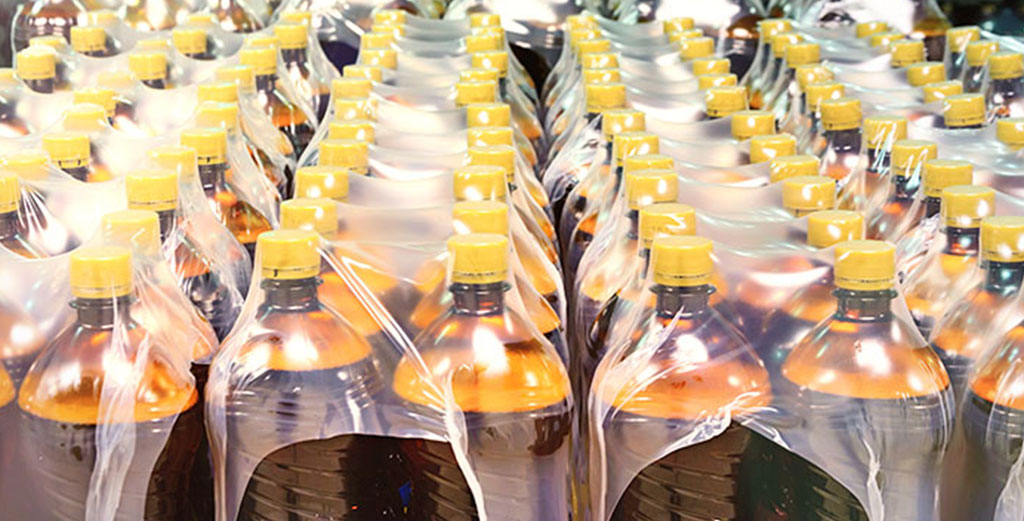
Following the shrink-wrapping process, polyolefin shrink film or film made from other types of plastic conforms perfectly to the product’s shape, ensuring a tight and stable fit. Thanks to its flexibility and strength, shrink film is suitable for both lightweight products and heavy or palletized loads.
Shrink film protects products against external factors
One of the most important benefits of shrink film is its ability to protect products against external factors that can cause damage. After application, the film creates an effective barrier against dust, dirt, moisture and other impurities.
At the same time, tight packaging significantly reduces the risk of mechanical damage. Products are held firmly in place, preventing movement during handling or transport. This is especially important for fragile products, multipacks or goods stored for long periods.
Shrink film increases transport and storage safety
During transport and storage, products are exposed to increased risks such as impacts, vibrations and instability. Use stretch film and accessories from INATECH Packaging to improve safety by stabilizing products and keeping them in a fixed position.
For palletized goods, shrink film ensures load cohesion, reducing the risk of tipping or shifting. In storage, it protects products from dust and environmental conditions, preserving their quality until delivery.
Shrink film makes a significant contribution to reducing operating costs
Using shrink film has a direct impact on reducing operating costs. Because it conforms precisely to the product, material consumption is reduced without unnecessary waste. Compared with other types of packaging, film requires less storage space and is easier to handle.
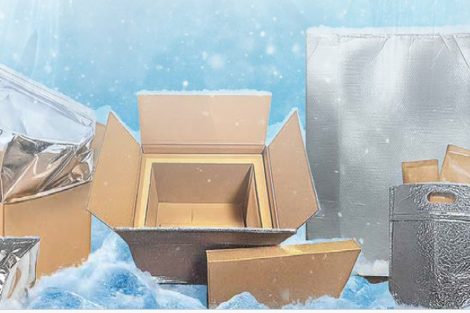
Printing on the film replaces additional labels, making product tracking easier in inventory management. You can view options for readily available thermal packaging through complete thermal packaging kits from INATECH Packaging.
Compactly packaged products take up less space in transport vehicles, allowing load optimization and reducing logistics costs. In addition, fewer damaged products mean fewer returns, fewer replacements and significant long-term savings.
Shrink film improves packaging process efficiency
The shrink-film packaging process is fast and efficient, especially when carried out using specialized equipment. INATECH Packaging offers a wide range of packaging machines and consumables. Automating this process reduces working time and labor costs, helping increase productivity.
Uniform and consistent packaging improves product appearance, providing an added sense of professionalism and confidence for customers. In addition, process standardization reduces errors and optimizes operational flow.
Industries where shrink film is used
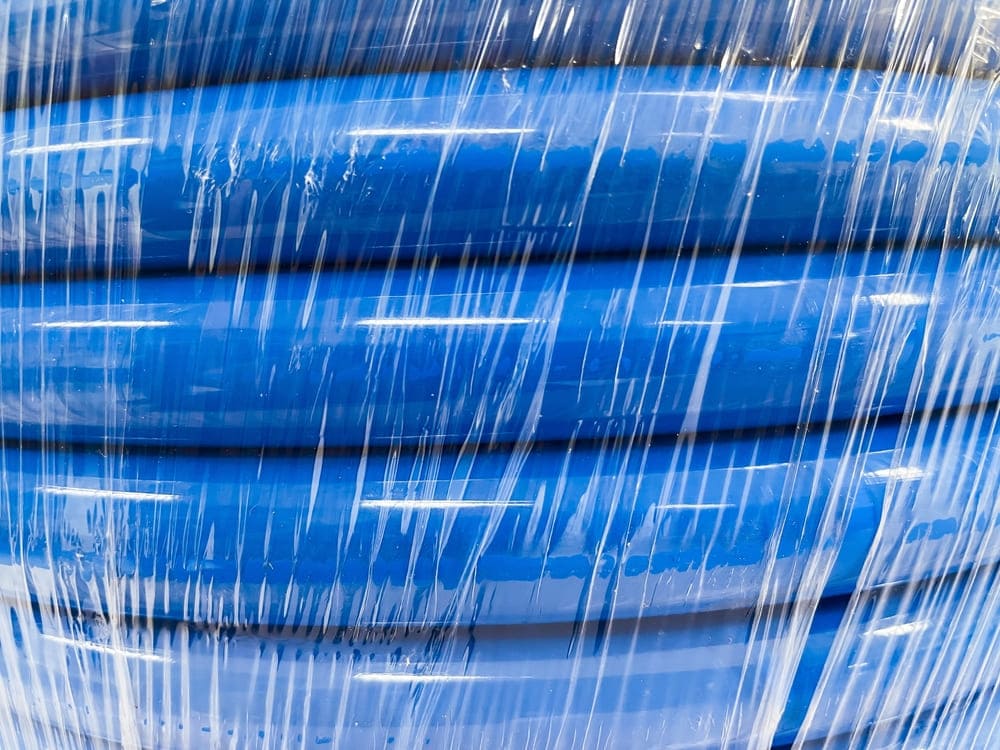
Shrink film is used across a wide range of industries because it can protect products and improve packaging processes:
-
Food and beverage industry – used to package multipacks of bottles, cans, tins or individually packaged products, providing stability, moisture protection and safe transport;
-
Manufacturing and processing industry – ideal for packaging parts, components and subassemblies, protecting them from dust, dirt and mechanical damage during handling and storage;
-
Logistics and storage – used to stabilize palletized goods, reducing the risk of shifting or tipping during transport and helping optimize storage space;
-
Retail and commerce – valued for its transparency, which allows the product to remain visible on the shelf while providing clean, uniform and professional packaging;
-
Electronics industry – used to protect sensitive components and equipment from moisture, dust and electrostatic discharges;
-
Building materials industry – suitable for packaging heavy or bulky products such as profiles, panels or accessories, facilitating handling and reducing losses;
-
Pharmaceutical and cosmetics industry – used to group and protect products, preserving packaging integrity and compliance with safety standards.
Choosing the right shrink film optimizes results
For optimum results, shrink film should be selected according to the product type, its weight and the conditions of use. Different film thicknesses and types are available, each adapted to specific requirements.
| Selection criterion | Description | Recommended film type | Recommended thickness | INATECH Packaging recommendation |
|---|---|---|---|---|
| Product type | The product’s shape, fragility and nature influence the type of film | Polyolefin (POF) for fragile products, polyethylene for robust products | 12–19 microns for fragile products, 30–100 microns for solid products | Products with irregular shapes require flexible film with uniform shrinkage |
| Product weight | Weight determines the required film strength | Polyethylene shrink film (PE) | 50–150 microns, depending on weight | Heavy products require thicker film for stability |
| Product size | Dimensions influence film width and strength | Polyethylene or tubular film | 30–120 microns | Bulky products require wide, stronger film |
| Transport conditions | Distance and handling can affect the packaging | High-strength polyethylene | 80–150 microns | For long-distance transport, film with increased strength is recommended |
| Storage conditions | Exposure to dust and moisture | Polyethylene or polyolefin | 30–100 microns | In demanding environments, film with enhanced protection is recommended |
| Desired protection level | Required level of safety | Thick polyethylene | 100–200 microns | For maximum protection, thick films and firm sealing are used |
| Packaging type | Manual, semi-automatic or automatic | Polyolefin for automation | 12–25 microns | Compatibility with equipment is essential |
| Final appearance | Importance of product presentation | Transparent polyolefin | 12–19 microns | Ideal for retail and shelf presentation |
| Cost efficiency | Balance between cost and performance | Standard polyethylene | 30–80 microns | The right choice reduces unnecessary material consumption |
Safety, environmental and certification considerations
By applying shrink film, you can more easily meet food safety and sustainability requirements. Many modern products do not release hazardous substances and can be recycled. When packaging food or medicines, make sure you use variants that are legally approved and certified for direct contact with sensitive products.
Are you looking for environmentally friendly solutions or do you want to recover packaging waste? Explore the offers from INATECH Packaging, where you can find materials that are easy to recover or, in certain cases, biodegradable.
| License: e19453905c1672254d8b4c92c9a24a2626 Alt: Safety and environmental certification for shrink film |
Frequently asked questions about shrink film
Here is what you need to know when choosing the right film for your products:
What is shrink film and how does it work?
Shrink film is a special plastic material that contracts when exposed to heat. After heating, the film conforms tightly to the product, providing protection, stability and compact packaging.
What types of products can be packaged with shrink film?
Shrink film can be used to package food products, beverages, industrial products, parts, equipment, electronic components and products intended for retail.
Does shrink film protect products against moisture and dust?
Yes, after shrinking, the film creates an effective barrier that protects products against moisture, dust, dirt and other external factors.
Does shrink film prevent damage during transport?
Yes, tight packaging stabilizes products and reduces their movement during handling and transport, lowering the risk of impact, scratching or breakage.
Does shrink-film packaging reduce logistics costs?
Yes, compactly packaged products take up less space in storage and transport vehicles, allowing load optimization and reducing logistics costs.
Is shrink film suitable for pallet packaging?
Yes, shrink film is frequently used to stabilize palletized goods, ensuring load cohesion and reducing the risk of tipping or shifting.
What types of shrink film are available?
Several types of shrink film are available, differentiated by material, thickness and strength, with each type adapted to specific applications.
How do you choose the right shrink-film thickness?
Film thickness is selected according to product weight, the required level of protection and transport and storage conditions. Heavier products require thicker and stronger films.
Is shrink film suitable for automated packaging?
Yes, shrink film is compatible with automatic and semi-automatic equipment, enabling increased productivity and reduced packaging time.
Does shrink-film packaging improve product appearance?
Yes, transparent film provides a clean and professional appearance, allowing product visibility and contributing to an attractive shelf presentation.
Can shrink film be used for long-term storage?
Yes, shrink film is suitable for long-term storage because it protects products against environmental factors and dirt.
Does shrink film help reduce returns?
Yes, by preventing damage during transport and storage, shrink film helps reduce the number of returns and complaints.
Is shrink film an environmentally friendly solution?
Depending on the type of material used, shrink film may be recyclable. Choosing the right material helps reduce environmental impact.
What equipment is required to use shrink film?
Equipment such as heat guns, packaging machines or shrink tunnels is used to apply shrink film, depending on production volume.
Can shrink film replace other types of packaging?
Yes, in many situations, shrink film can replace bulky boxes or other packaging, offering similar protection at lower costs.
Shrink film is a modern and efficient solution that helps prevent product damage and reduce operating costs. By providing protection, optimizing space and improving processes, it directly contributes to better business performance across various industries. Consult INATECH Packaging’s packaging specialists for reduced costs and an efficient logistics flow.