


A brief guide to corrosion-resistant packaging
In the processing and transport of metal components or sensitive equipment, corrosion-resistant packaging is essential. It protects metal parts from rust and damage, maintaining product integrity during storage and transport. In this guide, you will learn about each type of corrosion-protection packaging marketed by INATECH Packaging:
What is corrosion and why does it occur?
Corrosion occurs when metal is simultaneously exposed to moisture and oxygen — this slow but continuous reaction can affect the structure of metals, compromising their functionality and service life. The costs associated with corrosion include material losses, refurbishment and energy consumption. Therefore, prevention is much more effective than repair. Suitable packaging is one of the most effective solutions for limiting these losses in the metallurgical, automotive or electronics industries.
The role of corrosion-resistant packaging
Corrosion-protection packaging creates a controlled environment around metal products, preventing direct contact with moisture and aggressive oxides. It acts as a physical or chemical barrier, inhibiting the oxidation process. These packages are particularly useful in situations such as maritime transport (where salty air is aggressive), long storage periods or exposure to unfavourable atmospheric conditions. They are used in the manufacture of metal parts and in the delivery of unassembled components.
Types of corrosion-resistant packaging
Here are the main types of corrosion-resistant packaging available from INATECH Packaging:
VCI packaging (volatile corrosion inhibitors)
VCI packaging (Volatile Corrosion Inhibitors) is made from paper or film impregnated with additives that vaporise and create a protective layer on the metal surface. This layer isolates the metal from aggressive molecules and moisture.
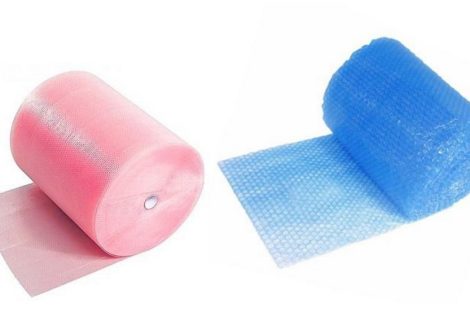
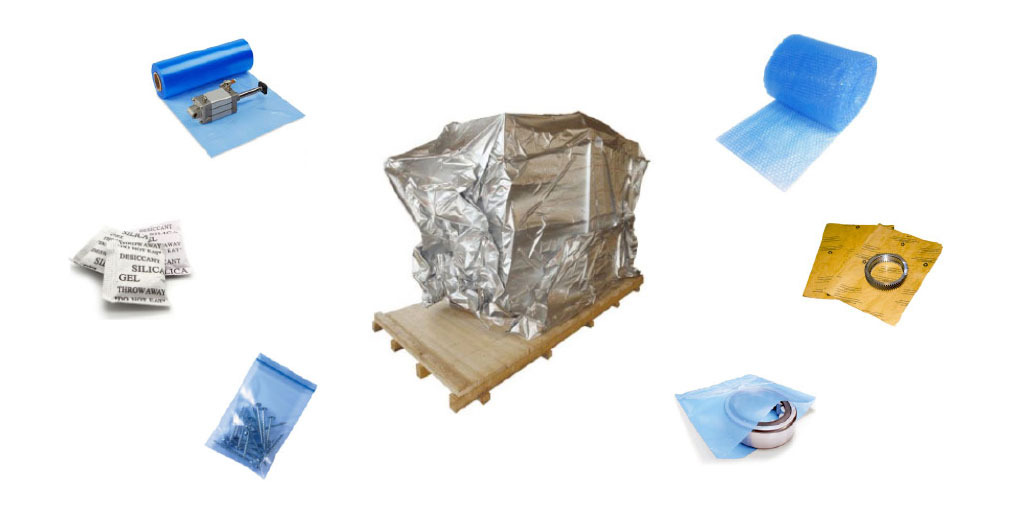
VCI options include: VCI stretch film, VCI kraft paper, VCI bubble film, VCI expanded polyethylene film, VCI bags, VCI sacks and covers. Aluminium foil shields with VCI additives also provide a high level of protection through an additional metal barrier.
Barrier packaging (barrier film)
This packaging combines multilayer materials (metallised film + polymer) that provide a strong physical barrier against gases, moisture and oxides. It is used when long-term protection is required in aggressive conditions.
Desiccants and vapour emitters
Desiccants, such as silica gel, absorb moisture from the packaging space, reducing the risk of corrosion. In addition, desiccant emitters or desiccant blankets can be placed inside the packaging for additional protection, especially in transit areas or in large packages. Common forms include silica gel sachets, desiccant blankets, desiccant hooks or standalone desiccant emitters.
| Type of corrosion-resistant packaging | Main material | Protection mechanism | Examples / Available forms | Recommended applications |
|---|---|---|---|---|
| VCI packaging (Volatile Corrosion Inhibitor) | Kraft paper, PE film, stretch film, bubble film | Releases inhibiting vapours that form an invisible protective layer on the metal | VCI stretch film, VCI kraft paper, VCI bags, VCI sacks, VCI bubble film | Transport and storage of metal parts, automotive components, industrial tools |
| Barrier film | Multilayer materials (aluminium + polymers) | Physical barrier against oxygen and moisture | Laminated films, barrier sacks, heat-sealable pouches | Long-distance export, long-term protection in aggressive conditions |
| Desiccant packaging (moisture absorber) | Silica gel, activated clay, chemical desiccants | Absorbs moisture from inside the packaging | Silica gel sachets, desiccant blankets, desiccant hooks | Hermetically sealed packaging, maritime or air transport |
| VCI emitters / corrosion-inhibiting tablets | Polymers impregnated with VCI additives | Releases corrosion-inhibiting vapours in confined spaces | Self-adhesive emitters, VCI capsules or tablets | Electronic boxes, precision instruments, optical equipment |
| Combined bags and sacks (VCI + barrier) | Polyethylene film + aluminium or VCI paper | Combination of physical barrier and chemical protection | VCI zip bags, combined barrier + VCI sacks | International transport, storage in areas with high humidity |
| VCI foam or expanded polyethylene packaging | PE foam, expanded film | Mechanical protection + inhibiting vapours | Trays, separators, protective rolls | Packaging fragile equipment or finished parts |
| Integrated systems (VCI + desiccant + barrier film) | Multiple combination | Complete protection against moisture, oxygen and mechanical shocks | Customised packaging, complete corrosion-protection kits | Sea transport, long-term storage, strategic exports |
Advantages of corrosion-resistant packaging
Here are the main benefits of using corrosion-resistant packaging and rust-protection packaging from INATECH Packaging:
Durability and reduced losses
By protecting metals from corrosion, corrosion-resistant packaging reduces material losses and refurbishment or disposal costs. The metal component reaches its destination in optimal condition.
Cost-effective and adaptable
Although sophisticated, VCI packaging has relatively low costs compared with the damage caused by oxidation. It can be adapted to the dimensions of the parts, while films and sacks can be customised.
Safety and compatibility
This packaging is generally non-toxic, recyclable and does not endanger workers’ health. It leaves no aggressive residues and is compatible with most industrial environments.
Long-term protection
Modern VCI packaging has an extended service life (often 5 years), providing long-term protection even during prolonged storage.
Practical applications of corrosion-resistant packaging
Corrosion-resistant packaging is used in industries such as automotive, metallurgy, electronics and industrial equipment. It is indispensable for:
- exporting metal components to regions with humid or maritime climates;
- long-term storage in humid conditions;
- delivering unassembled parts that may be affected by oxidation during transport;
- manufacturing and delivering sensitive equipment with unprotected metal surfaces.
By choosing the right packaging, companies can reduce corrosion-related complaints, improve product image and control quality at the destination.
Frequently asked questions about corrosion-resistant packaging
What is corrosion-resistant packaging?
Corrosion-resistant packaging consists of materials specially designed to protect metal parts from rust and corrosion during transport and storage. It creates a physical or chemical barrier that prevents contact between the metal, moisture and oxygen.
How does VCI packaging work?
VCI packaging (Volatile Corrosion Inhibitor) releases corrosion-inhibiting vapours that settle on the metal surface, forming an invisible protective layer. This layer prevents the chemical reactions that cause oxidation and rust.
What types of corrosion-resistant packaging are available?
There are several types of corrosion-resistant packaging, including:
- VCI paper and film;
- VCI bags and sacks;
- barrier films;
- desiccants and vapour emitters;
- combined packaging (VCI + barrier + desiccant).
Each type is selected according to the nature of the product and the storage period. Various solutions such as corrosion-inhibiting spray can be used to protect iron, steel, aluminium and copper against rust.
What is the difference between barrier film and VCI film?
Barrier film provides physical protection against moisture and oxygen, making it ideal for long-term storage.
VCI film, on the other hand, provides chemical protection through corrosion-inhibiting vapours that neutralise the factors causing oxidation.
What is the service life of VCI packaging?
The protection period depends on environmental conditions and the type of packaging, but in general VCI films and bags provide protection for between 1 and 5 years when used correctly and stored in dry environments.
Can corrosion-resistant packaging be recycled?
Yes. Most VCI packaging is made from recyclable materials such as polyethylene or kraft paper. It can be safely disposed of without toxic environmental impact, in accordance with applicable recycling regulations.
Can corrosion-resistant packaging be used for electronic products?
Yes. VCI packaging is safe for electronic products and sensitive components because it contains no oils, acids or substances that could damage metal surfaces or circuit boards.
What happens if I use standard packaging instead of corrosion-resistant packaging?
If metal is packed in standard materials (standard film, cardboard, simple plastic), moisture and oxygen can cause oxidation and rust. The result is product damage, financial losses and potential customer complaints.
What conditions must be met for optimal protection?
For effective protection against corrosion, it is recommended to:
- use the right VCI packaging for the type of metal;
- avoid touching the metal with bare hands (grease can promote rust);
- keep packaged products in dry, condensation-free areas;
- hermetically seal VCI bags and sacks.
In which industries is corrosion-resistant packaging used?
Corrosion-resistant packaging is used in industries such as:
- automotive and aerospace;
- machine building;
- metallurgy and mechanical components;
- electronics;
- logistics and equipment export.
Corrosion-resistant packaging is an essential component in protecting metals against degradation. Choosing correctly between VCI packaging, barrier packaging or desiccant systems can make the difference between a product arriving intact and one affected by corrosion.
In turn, the cost-benefit balance of adopting these solutions is reflected in reduced costs, increased product reliability and customer satisfaction. If you want to implement corrosion-resistant packaging solutions for your metal products or optimise your logistics chain with advanced protection, this guide can help you find the optimal solution. Would you like to learn more about other types of protective packaging? Contact us at +40 214.480.358 or [email protected], and the specialists at Inatech Packaging will help you find the right solution for your needs.