A Practical Guide to Choosing Strong Cardboard Boxes for International Shipping
International shipping puts your packaging to the test at every stage: loading, unloading, stacking, long-distance transit, temperature differences and humidity. If you choose unsuitable boxes, products arrive damaged, complaints arise and costs quickly increase. If you select the right packaging, you reduce risks and maintain a stable logistics flow.
INATECH Packaging specialists present this guide to professional packaging, helping you choose strong cardboard boxes adapted to international shipping. You will find practical steps, technical criteria and recommendations for online stores, factories, production lines and companies in sectors such as automotive, electronics, pharmaceuticals, construction and furniture manufacturing.
Analysing real shipping conditions determines the required strength level
Before selecting or ordering cardboard boxes, it is essential to analyse the actual route of the goods and the conditions to which the packaging will be exposed during transport.
A product intended for export does not travel a simple route. It passes through several logistics points, is loaded and unloaded multiple times, stacked on pallets and then placed in containers. During this process, the box is subjected to continuous vertical pressure and constant vibration.
Sea freight adds a critical variable: humidity. Condensation forming inside containers can affect the cardboard structure and reduce its strength. During long-distance road transport, vibration weakens the material’s rigidity if it has not been selected appropriately.
For consistent results, the type of transport must be matched to the cardboard structure. Air delivery for lightweight products does not require the same strength as sea freight lasting several weeks for metal components or industrial parts.
The type of corrugated cardboard directly affects packaging performance
Corrugated cardboard is not a uniform material. Its structure consists of flat layers and one or more fluted layers, and their number determines the level of protection provided.
Single-wall cardboard boxes
Single-wall boxes are suitable for lightweight products, textiles or low-weight accessories. They are effective for fast deliveries and limited handling, but they cannot withstand intensive stacking or long-distance transport.
Double-wall cardboard boxes
Double-wall cardboard boxes are frequently used for export because they provide greater resistance to compression and puncture. They can protect electronic equipment, medium-sized industrial components or secondarily packaged pharmaceutical products.
Triple-wall cardboard boxes
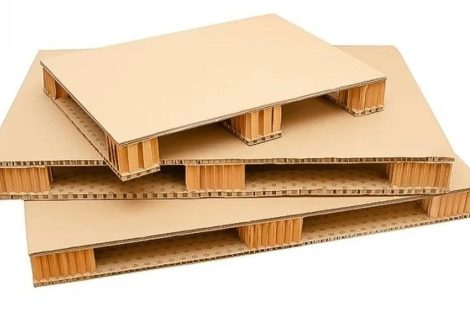
Triple-wall cardboard boxes are recommended for bulky or heavy products, such as industrial subassemblies or metal components. In certain situations, they can replace wooden crates, offering the benefits of lower weight and easier handling.
Correct box sizing reduces logistics risks and costs
An oversized package does not provide additional protection. On the contrary, empty space allows the product to move and increases the risk of internal impact. At the same time, carriers often calculate rates based on volumetric weight. Therefore, unnecessarily large volume can lead to additional logistics costs.
The correct process involves measuring the product and adding 2-5 cm of space for internal protective materials. For companies with a constant delivery flow, customised boxes are an efficient solution. INATECH Packaging provides customisation services adapted to product dimensions, helping optimise protection and reduce costs.
ECT and BCT technical indicators validate actual strength
Strength assessment should not be based on the apparent thickness of the cardboard. Specific technical indicators are required:
- ECT measures edge crush resistance under vertical compression and indicates the box’s stacking capacity;
- BCT evaluates the box’s resistance to top-to-bottom pressure, taking into account the material, dimensions and bonding method.
When stacking on multiple levels, the BCT value must exceed the load applied to the bottom box. The cardboard grammage directly affects strength. Values of 400-500 g/m² are suitable for medium-weight products, while over 600 g/m² is suitable for heavy loads. Pay attention to the use of FEFCO codes adapted to international shipping activities!
Internal protection complements structural strength
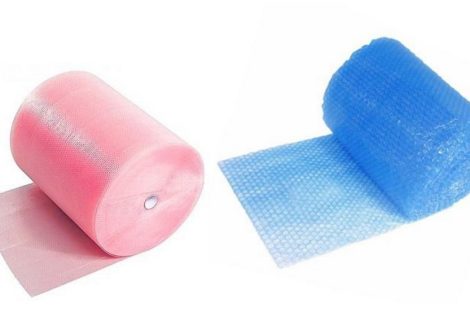
Even a strong box requires internal securing to prevent product damage. Cardboard dividers can protect containers, polyethylene foam protects electronic components, and bubble wrap reduces the risk of scratches. Consider using cardboard boxes with retention film, available in various models: for fragile products, electronic products and more.
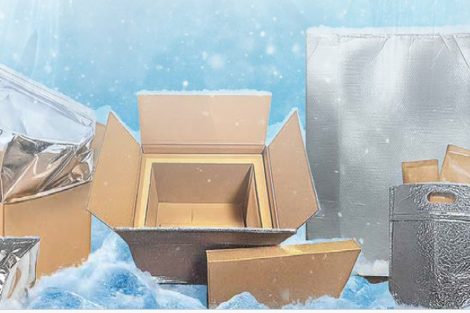
For sea freight, protection against humidity is essential. In this context, barrier bags and desiccant sachets reduce the risk of condensation and corrosion. INATECH Packaging offers complementary solutions such as thermal insulation packaging and protective materials, which can be integrated into a complete logistics system.
Avoiding unsuitable packaging reduces the risk of damage
Reused or damp boxes lose their rigidity, and affected cardboard fibres can no longer support vertical loads. Thin packaging intended for household use is not suitable for export, and using it increases the risk of failure. Last but not least, visually inspecting each batch of boxes helps prevent defects and optimise the use of cardboard packaging for international shipments.
Meeting labelling requirements improves handling
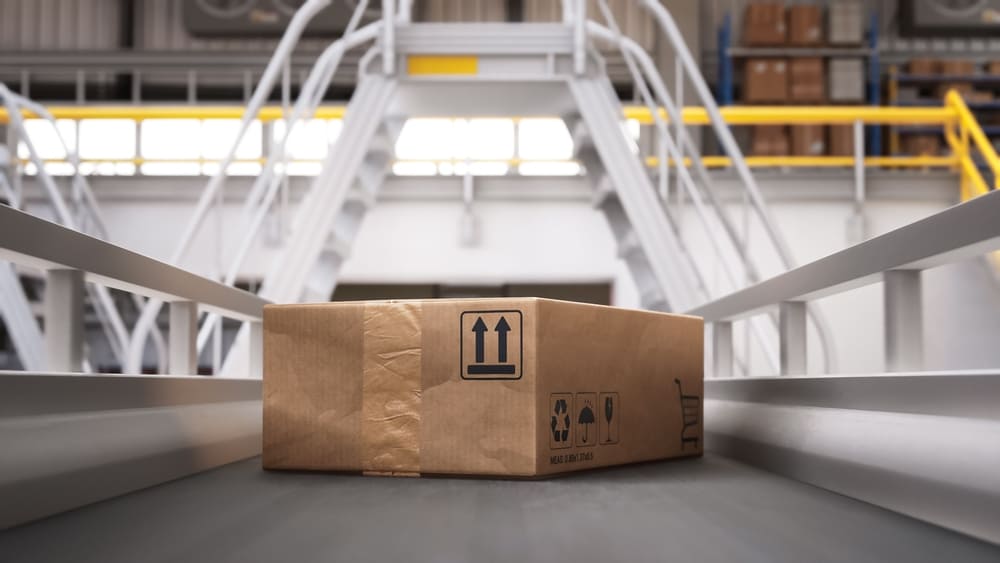
Markings such as Fragile or This Way Up contribute to proper handling. Compliance with the ISPM 15 standard for wooden pallets is mandatory, while using FSC-certified packaging supports compliance with environmental requirements. To meet these needs in international transport, INATECH Packaging supplies products certified for industrial use, including boxes made from waterproof cardboard.
Frequently asked questions about cardboard boxes for international shipping
What type of cardboard is suitable for international shipping?
For international shipping, double-wall or triple-wall cardboard boxes are recommended because they provide better resistance to compression, stacking and impact.
Can I use single-wall cardboard boxes for export?
Single-wall boxes are suitable only for lightweight products and fast deliveries. They do not provide sufficient protection for long-distance transport.
How do I choose the correct box size?
The box size should be close to that of the product, with 2-5 cm of space for internal protective materials.
Why are ECT and BCT indicators important?
ECT shows resistance to vertical compression, while BCT indicates how much the box can withstand when stacked.
Is internal protection necessary?
Yes. Dividers, foam or bubble wrap help secure products and reduce the risk of damage.
How do I protect products from humidity?
For sea freight, barrier bags and desiccant sachets can be used to absorb moisture.
Can I reuse old boxes?
It is not recommended. Deformed or damp boxes lose their strength and may fail during transport.
What role does labelling play?
Markings such as Fragile or This Way Up help ensure proper handling of parcels.
Is packaging certification important?
Yes. FSC-certified packaging and compliance with the ISPM 15 standard for pallets are required for international shipping.
Can I combine boxes with other protective solutions?
Yes. Boxes can be complemented with protective materials and special packaging supplied by INATECH Packaging.
Choosing the right cardboard boxes is not only an operational decision, but also a factor that directly influences product safety, supply chain stability and long-term costs. When packaging is adapted to real shipping conditions, the risk of damage decreases significantly and deliveries reach their destination in optimal condition.
INATECH Packaging offers professional packaging solutions designed for the requirements of international shipping, from strong corrugated cardboard boxes to protective materials and complete packaging systems.