

Everything About Paper Bags: Types, Materials and Manufacturing Process
Paper bags were one of the most important packaging innovations of the 19th century, forever changing how products are delivered and presented. From modest beginnings in North America to today’s automated factories, paper bags provide sustainable, attractive and efficient solutions. In today’s era of transition towards eco-friendly packaging, paper bags are increasingly used in retail, horeca, e-commerce, branding, events and gifting.
In this complete guide, you will discover everything about paper bag manufacturing, types of paper bags, paper bag materials, the step-by-step production process and their many uses. You will learn how to choose the right model and why paper bags are an excellent option for any business.
Who Invented the Paper Bag?
The story began in the 1850s, when American teacher Francis Wolle designed the first machine capable of producing paper bags in large quantities. This pioneering invention enabled the efficient production of the first bags, although they were not yet sturdy. Around 1870, Luther Childs Crowell introduced the flat-bottom design, which was patented and completely changed how bags were used, allowing them to stand upright and hold weight. Later, Margaret E. Knight perfected the full automation of the design, launching large-scale industrial production. Since then, the process has evolved continuously, introducing customisation, colour printing and increased manufacturing speed.
Types of Paper Bags
Kraft Paper Bags
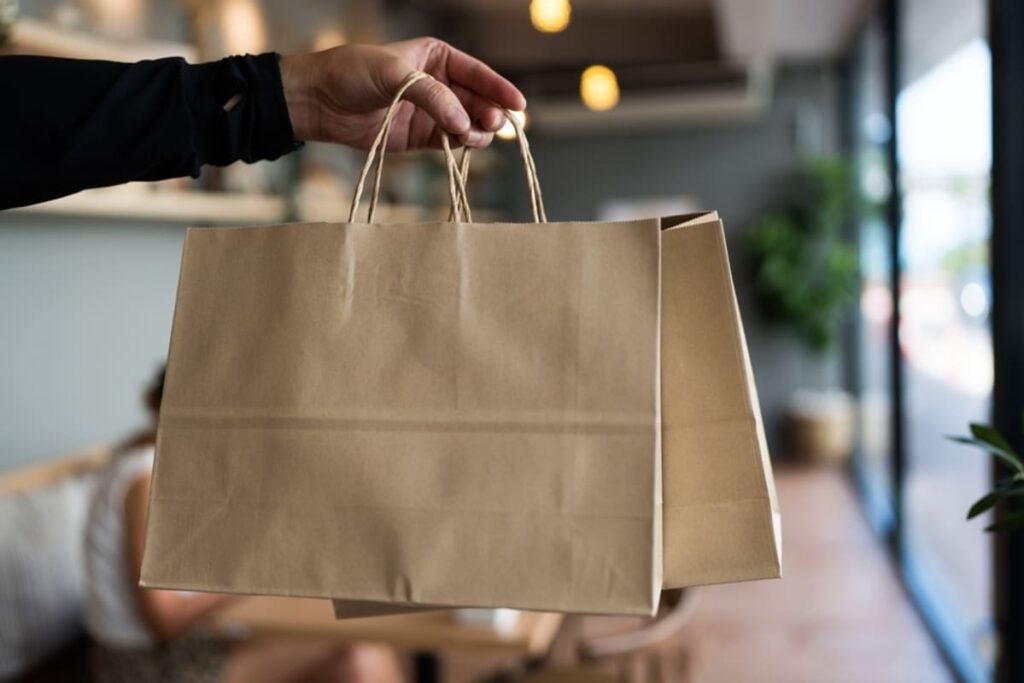
These are the most common and widely used models. Made from kraft paper (natural, recycled or coloured), they are strong, biodegradable, easy to print and capable of carrying significant weights. They are used in retail, fast food, markets, events and online commerce.
Bags with Handles – Rope, Flat or Die-Cut
Natural rope handles (round) add elegance and are frequently used on gift bags. The flat version is practical, economical and easy to store. The die-cut handle design offers a minimalist, modern appearance.
Paper Bags with Film
These bags have an inner film layer that provides resistance to moisture, grease and contact with liquids. They are ideal for food products (fast food, pizza and sandwiches) or cosmetics.
Decorative and Luxury Bags
Made from thick, coloured, textured or metallic paper, with elegant prints and decorative elements (bows, cords and ribbons). These models are ideal for gifts, corporate events or premium products.
Other Special Models
-
Bags with a transparent window – allow the contents to be viewed (sweets, coffee, etc.);
-
Wide-bottom bags – excellent for bulky items;
-
Gusseted bags – provide more volume and are useful in retail.
What Materials Are Used to Make Paper Bags?
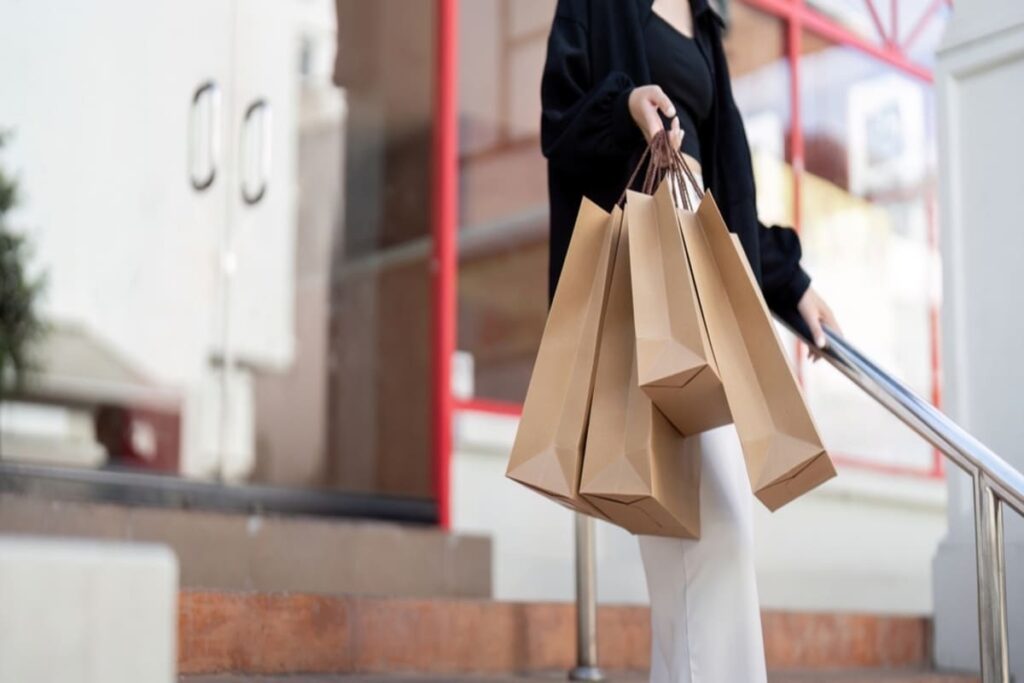
Materials are essential to the performance and purpose of each bag:
-
Natural kraft paper – robust, biodegradable and recyclable;
-
Recycled kraft paper – ideal for eco-conscious brands, as it is sustainable and environmentally friendly;
-
White paper – excellent for printing and customisation;
-
Waxed / treated paper – resistant to grease, moisture and food products;
-
Laminated paper – additional protection against liquids and oil;
-
Satin, textured and metallic paper – used in premium packaging.
For increased stability and strength, reinforced inserts or bottoms made from cardboard kits are added. These provide the necessary structure and reduce the risk of tearing.
Paper Bag Manufacturing Process: Step by Step
Stage 1: Material Selection and Preparation
The appropriate types of paper are selected (kraft, recycled or decorative). The rolls are inspected for quality, thickness and any imperfections.
Stage 2: Printing and Cutting
The paper is printed using flexographic, offset or digital technologies. Designs may include a logo, slogan, QR code or instructions. After printing, the material is cut to dimensions matching the project.
Stage 3: Gluing and Bag Formation
The sheets are automatically folded and glued along the side. The bottom of the bag is formed with transparent folds for flat-bottom models. The handles (rope, flat or die-cut) are then attached automatically using adhesive.
Stage 4: Finishing, Quality Control and Packaging
Each packaging bag and sack is checked for stability, bond strength and print quality. Customised bags can be individually packaged and labelled for scheduled delivery.
Stage 5: Logistics and Delivery
After packaging, the products are stacked efficiently and prepared for distribution. Most manufacturers offer fast delivery options for large volumes.
Advantages and Uses of Paper Bags
Uses of Paper Bags
-
Retail, markets and physical shops;
-
Events, trade fairs and promotions;
-
Online orders, fast food and takeaway;
-
Branding and promotional campaigns;
-
Corporate or customised gifts.
Benefits and Advantages
-
Eco-friendly: biodegradable, recyclable and compostable;
-
Cost-effective: high-volume production at low costs;
-
Customisation: design, colours, logos and brand messages;
-
Food safety: treated options for food products;
-
High load capacity: from small products to bulky paper packaging.
How to Choose the Right Bag for Your Business
When choosing paper bags, it is essential to consider:
-
The weight of the packaged products;
-
The type of contents (food, non-food, liquid, etc.);
-
The need for customisation (branding);
-
The intended use: transport, gifting or promotion;
-
Storage and transport conditions.
For example, treated paper bags that resist grease are ideal for a confectionery shop. A fashion store, on the other hand, may choose kraft bags with round handles and an elegant print.
Recycled Paper and Its Environmental Impact
One of the most important benefits of paper bags is their environmental potential. Bags made from recycled paper help reduce deforestation and the consumption of natural resources. In addition, the recycling process uses less energy and generates lower emissions than plastic or aluminium production.
By choosing recycled paper, businesses not only comply with environmental regulations but also gain the trust of consumers concerned about sustainability. Eco-friendly packaging is increasingly appreciated in retail, especially among younger generations.
Find out how to recycle paper packaging correctly: tips and tricks!
Frequently Asked Questions
How Much Weight Can a Paper Bag Hold?
It varies depending on the thickness of the paper. Bags made from 70 g/m² paper can hold up to 4 kg, while 90–110 g/m² models can carry 10–12 kg, especially when reinforced.
Can Bags with Film Be Recycled?
Generally, no. Simple kraft bags are easier to recycle, while laminated models require industrial separation.
What Sizes Are Available?
There are small bags (e.g. 200 × 300 mm) through to very large models (450 × 800 mm), as well as bags customised on request.
Can They Be Used for Online Retail?
Yes, especially thick, reinforced kraft paper models. They can be combined with other packaging for extra protection.
Which Type of Printing Is Recommended?
Flexographic printing for large orders, digital printing for fast customisation and small runs. Offset printing is ideal for premium bags.
Customised Paper Bags – An Effective Branding Strategy
One of the most important advantages of paper bags is the possibility of complete visual and functional customisation. You can choose to print your logo, slogan or even a unique design that reflects your brand identity. This branding method is highly effective in retail and at corporate events, where brand visibility is essential.
Customised paper bags are also perceived as premium packaging, suggesting attention to detail and a high level of professionalism. They function as a mobile promotional channel: customers who carry them become ambassadors for your brand.
Making the Right Choice for Your Industry
Different industries have specific packaging needs. In the horeca sector, bags treated against grease and moisture are essential. In retail, the focus is on presentation and branding. In e-commerce, bags need to be strong, compact and easy to store.
For example, a florist may choose paper bags with a window to highlight the beauty of bouquets, while a jewellery shop may prefer elegant models with cord handles and satin paper. The food industry needs safe packaging approved for food contact, while the gifting sector prefers attractive and colourful bags.
In each case, choosing the right type of paper bag can improve customer perception and add value to the final product.
Why Choose INATECH Packaging Paper Bags?
We offer a wide range of kraft, decorative and customised paper bags, with fast delivery options. Our customers receive personalised recommendations, size guides and design support. We specialise in efficient solutions for brands that focus on image and sustainability.
Paper bags are a fundamental pillar of modern packaging: simple, attractive, durable and eco-friendly. With a wide variety of paper bag types, materials and high-quality manufacturing processes, they provide ideal solutions for any business. Whether you need robust bags for transport, elegant bags for gifts or customised options for branding, you have a wide range of choices available.
Contact the Inatech team for personalised recommendations and order quality paper bags online, adapted to your needs and with fast production options.