

How to Properly Attach a Document Pouch to a Parcel: 8 Tips for Secure Fixing
Applying a document pouch correctly may seem like a minor detail, but it directly affects the delivery of your parcels. If you run an online store, coordinate a production line or manage daily shipments in logistics, you know how easily delays can occur because of lost or illegible documents.
A detached pouch means delays, additional checks or even returns. The invoice, waybill or customs documents must arrive intact and be easy to read. That is why the way you attach courier envelopes and bags is important and requires a clear procedure applied consistently in the warehouse.
What is a document pouch and when do you use it?
A document pouch, also known as a “document enclosed” pouch, is a transparent, self-adhesive polyethylene pocket that is resistant to water and tearing. You attach it to the outside of the parcel to protect documents from moisture, dust and repeated handling.
You use it for most courier shipments, where the waybill must be visible and easy to scan. For international deliveries, you place the commercial invoice, packing list, customs declaration or other documents required by the destination country inside the pouch. Customs authorities can check the paperwork without opening the parcel, while missing documents may hold the goods in transit.
Document pouches are available in C6, C5, DL or C4/A4 formats. Versions with permanent adhesive provide stable fixing on cardboard, while those with removable adhesive allow repositioning. For long-distance transport or high-humidity conditions, choose models made from thicker film with increased water resistance.
Where should you correctly attach the pouch to the parcel?
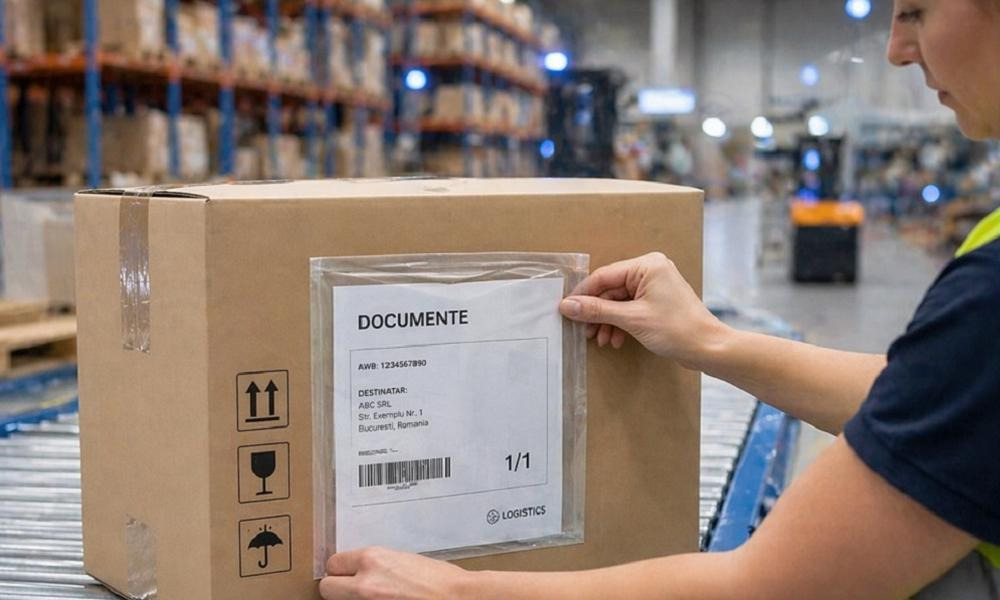
Positioning affects both adhesion and processing speed in automated warehouses. Apply the document pouch to the top of the box, on a flat, clean surface without seams. This allows the courier to scan the barcode quickly and sorting-centre staff to identify the delivery details easily.
Avoid corners, edges and curved areas. During handling, these areas are subject to greater mechanical stress, which can cause the pouch to partially detach. Do not stick the pouch over the sealing tape or cover the shipping label. If you use an A4 waybill and a smaller pouch for additional documents, position them next to each other without overlapping.
For corrugated cardboard boxes with a rougher texture, check adhesion immediately after application. For stable results, press firmly over the entire adhesive surface.
How do you correctly insert documents into the pouch?
Before inserting the paperwork, check that all information is complete and legible. An incorrectly written address or an incorrect tariff code can generate additional costs and wasted time, especially in e-commerce packaging.
Fold the documents neatly without covering barcodes or important information. If you use a C5 pouch for an A4 invoice, fold the sheet in half with the printed side facing outwards. Do not force several documents into a pouch that is too small, as they may become creased and difficult to read.
For international shipments or high-value products – such as electronic components, automotive parts or medical equipment – place a copy of the documents inside the parcel as well. This simple measure provides a backup in case the outer pouch is damaged.
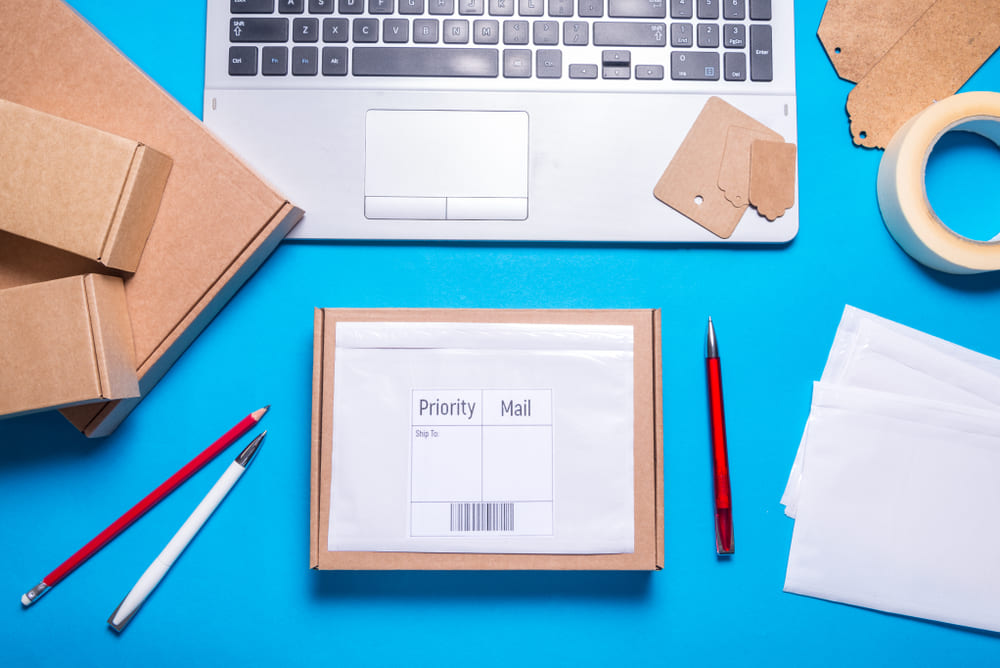
Tips for securely attaching a document pouch to a parcel
1. Choose the right size for your documents
Select the pouch according to the document format. For an unfolded A4 waybill or invoice, use a C4/A4 pouch. If folding is acceptable, you can choose C5. A pouch that is too small puts pressure on the paper and affects legibility, while one that is too large allows the documents to move inside.
In high-volume warehouses, standardise the size used for each type of shipment. This reduces errors and simplifies staff training.
2. Clean the box surface before applying the pouch
Dust, moisture or traces of grease reduce adhesive performance. Wipe the area with a dry cloth and apply the pouch only to dry cardboard. If parcels are stored in cold areas, leave the boxes at room temperature for a few minutes to prevent condensation.
This step takes only a few seconds but helps prevent detachment during the first hours of transport.
3. Position the pouch on a flat, visible area
Apply the pouch to the top of the parcel, slightly centrally or near the shipping label, without covering it. Clear visibility enables quick scanning and reduces unnecessary handling.
For small boxes, make sure the pouch does not extend beyond the edges. It must remain completely attached to the surface.
4. Press firmly over the entire adhesive surface
After attaching the pouch, press evenly with your palm or a plastic squeegee. Pay particular attention to the edges and corners. In most cases, detachment starts in these areas.
In high-volume production lines, you can introduce a standard step in which the operator visually and manually checks the adhesion of every pouch.
5. Avoid applying the pouch over corners and seams
Cardboard flexes during handling. If you attach the pouch over a seam or corner, the adhesive will fail more quickly. Choose a stable area without mechanical stress.
This rule is especially important for heavy parcels, which are frequently used in the automotive industry or furniture manufacturing.
6. Do not cover barcodes or delivery details
Automated sorting systems read barcodes within a few seconds. If you partially cover them or fold them over an edge, the parcel will require manual checking and delivery will be delayed.
After application, check that all information remains completely visible and scannable.
7. Keep a copy of the documents inside the parcel
For exports or regulated products, this practice helps you comply with quality procedures. Pharmaceutical and electronics companies often include duplicate documents for traceability.
Establish this rule in your internal procedure and train the team to apply it consistently.
8. Use water-resistant pouches for long-distance transport
International transport or temporary storage outdoors exposes parcels to moisture. Choose pouches made from thick polyethylene, with strong adhesion and secure closure.
For stable results over long distances, invest in products certified for industrial use.
Common mistakes that lead to lost documents
One of the most common mistakes is applying the pouch to dirty or damp cardboard. The adhesive does not bond properly and the pouch comes off during transit. Many operators also fold documents over areas containing barcodes, making scanning more difficult.
Another problem occurs when returned parcels are reshipped. If you use the same pouch or leave old documents in place, you create confusion in the delivery system. Always replace the pouch and check that the information is up to date.
Complete solutions for efficient packaging
A correctly applied pouch is part of a wider packaging process. If you want control and efficiency, you need the right materials and equipment adapted to your workload.
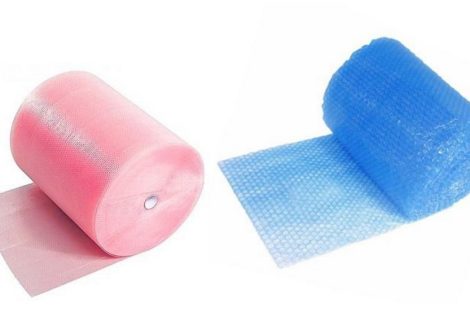
INATECH Packaging, a complete packaging solutions supplier, provides courier and e-commerce envelopes, along with a complete range of protective bubble envelopes made from durable paper for safe shipments.
Frequently asked questions about applying a document pouch to a parcel
Can document pouches be customised with the company logo?
Yes. INATECH Packaging offers customisation services according to volume and technical specifications. You can add a logo, contact details or logistics messages, while the team can recommend the right option for industrial use.
What should I do if the parcel is stored in high-humidity conditions?
Choose water-resistant pouches made from thick polyethylene and apply them to completely dry cardboard. For international transport, place a copy of the documents inside the parcel as well.
Are solutions also available for small businesses or individuals?
Yes. The range includes products for large companies, SMEs and non-industrial customers. You can order quantities adapted to your needs and request advice on choosing the right materials.
Applying a document pouch correctly is not just a logistics step, but an essential measure to ensure that delivery information reaches its destination intact. A securely attached pouch means protected documents, faster receiving processes and fewer risks of loss or damage.
When you choose quality materials and apply them correctly, you protect both your shipments and your brand’s professional image. Contact the INATECH Packaging specialists and choose durable, easy-to-apply document pouches suitable for the parcels you ship as part of your business.