

How does volumetric weight affect packaging and transport costs?
In logistics and transport, one of the most important factors influencing the final price is volumetric weight. Many retailers and customers focus exclusively on the actual weight of the parcel, but courier companies and international transport providers also calculate costs based on the space occupied in a vehicle, aircraft or container. Properly understanding volumetric weight helps you optimise packaging, reduce delivery costs and avoid unpleasant surprises when invoiced.
Volumetric weight – what it is and how it is calculated
Volumetric weight, also known as dimensional weight, is a calculation method used by transport companies to take into account both the actual weight of a parcel and the volume it occupies.
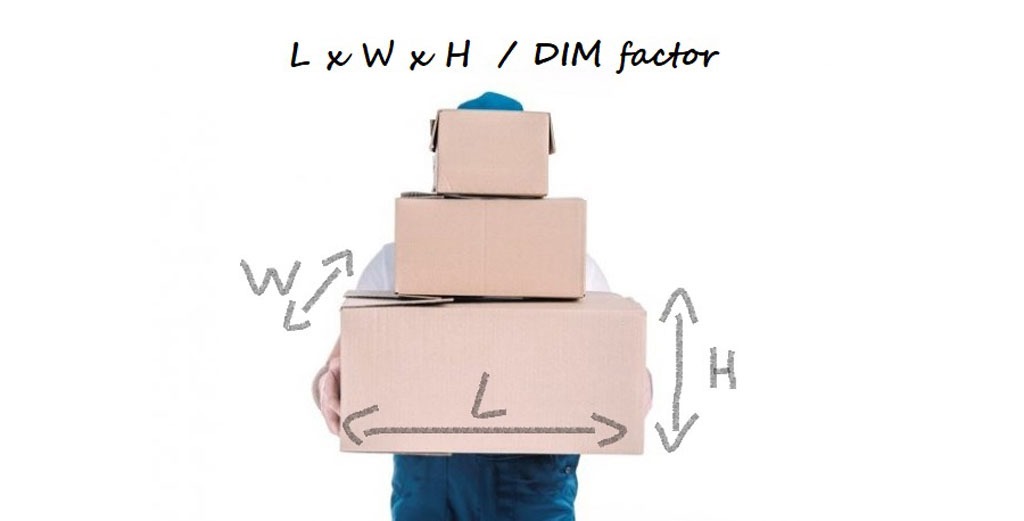
The standard formula used by most companies for packaging for transport is:
Volumetric weight (kg) = (Length x Width x Height) / Conversion factor
The conversion factor (DIM factor) varies depending on the type of transport:
- for air transport, 5000 is generally used;
- for road transport, the factor may be 4000 or 6000;
- for sea transport, the calculation is adjusted according to cubic metres (CBM).
Therefore, even if a parcel has an actual weight of 5 kg, if it occupies a large volume, it may be charged at a volumetric weight of 10–15 kg.
How transport companies use volumetric weight

Space in a truck, aircraft or container is limited. If two customers send parcels of the same weight, but one occupies twice as much space, the transport company incurs higher costs for that parcel. By using volumetric weight, carriers ensure fair billing based on the actual space occupied. Customers who package efficiently therefore benefit from lower costs, while oversized packaging is charged proportionally. This method encourages the optimisation of parcel dimensions, reducing wasted space and improving efficiency in national and international transport.
Efficient packaging to reduce the final cost

Proper packaging is one of the most important factors determining volumetric weight. Boxes that are too large, excessive protective materials or irregular shapes can artificially increase the parcel’s volume and, consequently, transport costs.
To reduce volumetric weight and increase warehouse efficiency during transport and throughout the supply chain:
- use boxes that are perfectly suited to the product’s size;
- eliminate unnecessary gaps by using lightweight materials (corrugated paper, air cushions);
- choose strong but compact packaging that provides protection without adding volume.
eCommerce companies that optimise packaging can save up to 20–30% on transport costs, especially for international deliveries. Packaging made from cardboard, wood or paper helps meet transport requirements precisely.
Examples of volumetric weight calculations
Let us assume that you are sending a parcel measuring 40 x 30 x 30 cm with an actual weight of 6 kg. Applying the standard formula for air transport:
(40 x 30 x 30) / 5000 = 7.2 kg
In this case, the courier company will charge for transport at 7.2 kg, not 6 kg. If the same parcel were packaged more compactly, for example at 35 x 25 x 25 cm, the volumetric weight would be only 4.4 kg, reducing the final cost by approximately 20%.
Reducing transport costs by optimising volume
Reducing costs does not only mean choosing the cheapest courier, but also optimising the space occupied by parcels. Here are several useful strategies:
- invest in custom packaging for your products;
- regularly analyse parcel dimensions and compare them with courier rates;
- work with logistics companies that provide smart packaging solutions;
- avoid oversizing packaging for fragile products – use foam and air cushions only where necessary.
By implementing these measures, you can keep logistics costs under control and improve business profitability.
| Transport / packaging type | Main characteristics | Volumetric weight calculation | Recommendations for reducing costs |
|---|---|---|---|
| Air transport | Fast, high cost, with strict size and weight restrictions. | (L x W x H) / 5000 | Use compact boxes, lightweight materials and eliminate empty spaces. |
| Road transport | Flexible, moderate cost, suitable for domestic and regional deliveries. | (L x W x H) / 4000 – 6000 | Optimise packaging and choose boxes suited to the products to reduce volume. |
| Sea transport | Cost-effective for large volumes, with costs calculated in cubic metres (CBM). | 1 CBM = 1000 kg volumetric | Compact the goods and use standardised pallets for efficient loading. |
| Rail transport | Efficient for long distances and heavy goods, with intermediate volumetric rates. | (L x W x H) / 6000 | Use strong packaging with thin walls to optimise space. |
| Cardboard box packaging | The most common method, lightweight and recyclable. | Depends on the dimensions and the courier’s factor. | Use double-wall corrugated cardboard adjusted precisely to the product. |
| Film or mailer packaging | Low weight, minimal volume, suitable for small products. | Usually charged according to actual weight. | Ideal for textiles, documents or accessories – avoid oversizing. |
| Pallet packaging | Used for heavy or bulky goods. | Calculated according to pallet height and the carrier’s factor. | Distribute the weight evenly and avoid gaps between parcels. |
| Container packaging | Suitable for exports and large volumes. | Calculated in CBM (cubic metres) according to container capacity. | Use modular packaging and optimise loading based on total volume. |
Frequently asked questions about volumetric weight and transport costs
Here are the details to consider when choosing packaging machines and consumables to optimise volumetric weight:
What is volumetric weight?
Volumetric weight, also known as dimensional weight, is a calculation method used by courier companies to take into account both the actual weight and the parcel’s volume. It reflects the space occupied in the transport vehicle.
How is volumetric weight calculated?
The standard formula is:
Volumetric weight (kg) = (Length x Width x Height) / Conversion factor.
The conversion factor (DIM) varies depending on the type of transport: 5000 for air transport, 4000–6000 for road transport, while sea transport is calculated based on the cubic metre (CBM).
Why does volumetric weight affect transport prices?
Transport companies charge according to the space occupied, not just the physical weight. A lightweight but bulky parcel takes up more space in an aircraft or truck, resulting in a higher rate.
What is the difference between actual and volumetric weight?
Actual weight represents the parcel’s effective mass measured in kilograms, while volumetric weight indicates the volume occupied by the parcel. For cost calculation, the higher of the two values is taken into account.
How can I reduce the volumetric weight of parcels?
You can reduce transport costs by:
- using boxes of the appropriate size;
- eliminating empty spaces inside the packaging;
- using lightweight protective materials;
- choosing strong but compact packaging.
For which type of transport is volumetric weight most important?
Volumetric weight has a major impact on air and international transport, where space is limited and costs are calculated strictly according to volume. However, it can also significantly influence the price of road transport.
Why is it useful to know the volumetric weight before shipping?
By knowing the volumetric weight, you can accurately estimate transport costs and choose the ideal packaging to reduce the final rate. It is an effective method for optimising your logistics budget.
In international transport, volumetric weight plays an even more important role because space is valued at a much higher cost. Airlines and shipping companies calculate every centimetre of volume to maximise loading efficiency. As a result, even small differences in packaging can generate significant price differences. In express air transport, a bulky but lightweight package can cost twice as much as a dense and compact one with the same actual weight.
Ask an INATECH Packaging specialist for advice when you are working on complex projects or cannot quickly find the right solution. Correctly calculating volumetric weight and choosing the right packaging can make a difference to your business’s competitiveness.