

Self-Adhesive Labels – How Do They Set You Apart from the Competition?
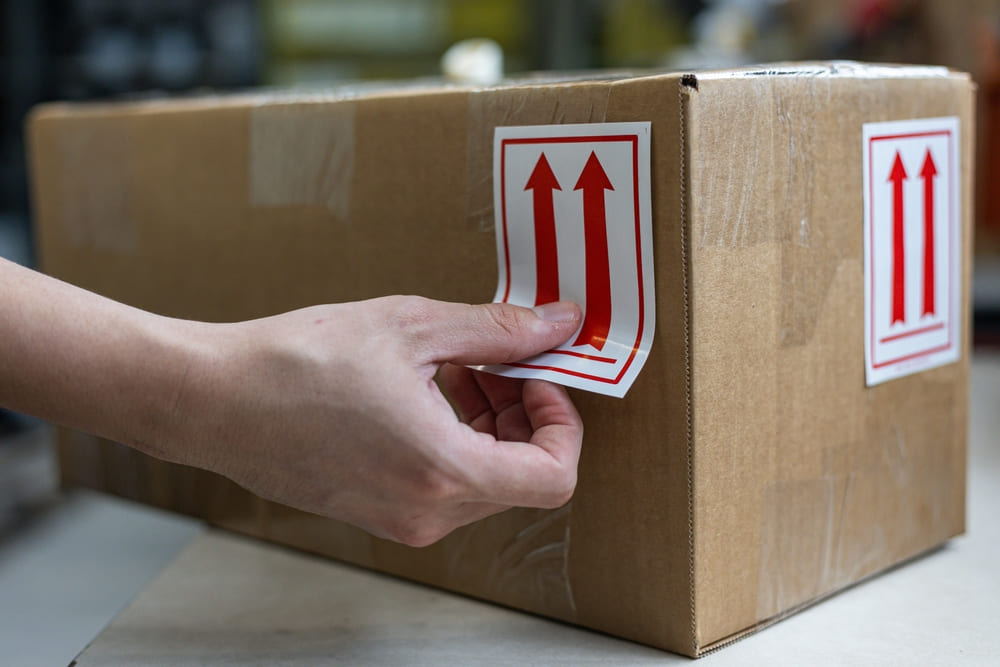
Self-adhesive labels have long gone beyond their role as simple identifiers for delivered products. Today, they are effective tools for branding, traceability and visual communication, while choosing the right labels influences the entire customer experience. Whether you manage an online store, a production line or a factory, labels have a direct impact on how your products are perceived and differentiated in the market. Read the practical guide below on using self-adhesive labels correctly, with examples and recommendations tailored to companies in Romania.
Why Self-Adhesive Labels Matter in Competition and Customer Relationships
Products quickly reach customers, and the packaging and label represent the first visual contact. A customised, correctly applied self-adhesive label confirms attention to detail and conveys professionalism. This becomes important when products compete directly on the shelf, in the warehouse or during shipping.
Main advantages of self-adhesive labels:
- They provide a user-friendly solution for clearly identifying products (batches, barcodes, instructions, expiry dates, safety information);
- They improve brand image through customised graphics, logos, colours and special finishes;
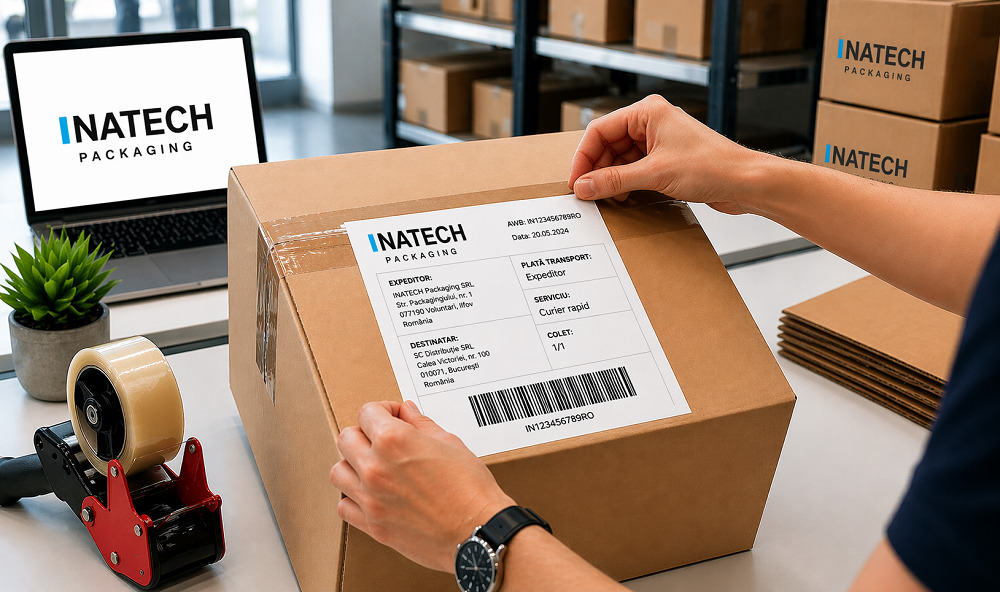
- They simplify logistics processes because they enable fast and precise application;
- They help ensure compliance with labelling legislation, including in regulated sectors such as food and pharmaceuticals.
Example: A food industry company uses moisture-resistant labels for refrigerated products and customised labels with nutritional information for each batch.
Learn more about the impact of packaging on distribution in this article: The Role of Packaging in Distribution.
Types of Self-Adhesive Labels: Practical Solutions
Self-adhesive labels are available in several types, each suited to a specific purpose. Here are some relevant examples for businesses in Romania:
- Polypropylene or polyester labels
Use these labels for packaging exposed to wear, chemicals or changing temperatures. They withstand friction and moisture and do not fade quickly. - Thermal labels
They are recommended for logistics and transport, where information changes frequently and on-site customisation is required. Printing is fast and the cost per unit remains low. - Promotional labels and packaging stickers
Do you want to highlight promotions, special instructions or batch information? Choose a customisable sticker for each campaign or season so that customers always receive up-to-date information.
Concrete example: A cosmetics manufacturer seasonally customises the stickers applied to its packaging, highlighting discount campaigns and themed collections.
We also recommend this guide on the responsible management of packaging waste: How to Recycle Protective Packaging.
How to Choose the Right Material for a Self-Adhesive Label
Selecting the right material depends on the label’s intended use, storage conditions and product type. Follow these steps to make an informed choice:
- Determine the intended environment
If shipping takes place under refrigerated conditions or the packaging reaches areas with high humidity, select water-resistant labels with a special adhesive for surfaces exposed to condensation. For premium packaging, use materials with a matt or gloss finish, or special card that adds visual value. - Analyse compatibility with the packaging
Test sample adhesion on the final surface (cardboard, plastic, glass, metal). Check whether the label comes off during handling or remains intact until delivery. - Check legal requirements
In sectors such as food or pharmaceuticals, labels must contain information required by law: batch number, ingredients, instructions or warnings. Consult INATECH Packaging specialists when necessary.
Important properties of modern materials:
- Adhesives that leave no marks on the packaging when removed;
- FSC-certified, environmentally friendly materials;
- Materials resistant to UV rays, temperature variations and high humidity.
Read here about the advantages of cardboard boxes combined with innovative labels: Large and Small Cardboard Boxes: Advantages.
Customising Self-Adhesive Labels: Added Value for Your Brand
Customised labels highlight brand uniqueness and keep customers informed. The customisation process includes:
- Choosing the graphic design (logo, colours, fonts);
- Selecting the material and finish (matt, gloss, metallic);
- Printing and applying the labels automatically or manually.
Specific customisation suggestions:
- Add security features such as QR codes or anti-counterfeiting information;
- Integrate the packaging design with professional adhesive tapes;
- Configure labels for batches, promotions or special events, with rapid data updates
For safe shipping and a professional appearance, consider using self-sealing cardboard envelopes, suitable for documents, samples or sensitive products: Colompac Self-Sealing Cardboard Envelopes.
What Are the Advantages of Self-Adhesive Label Materials Compared with Standard Labels?
Self-adhesive labels have become standard in modern packaging processes thanks to their practical benefits:
- Fast and simplified application:
You save time on the production line, regardless of the packaging type (boxes, rolls, bags, containers). - Durability and safety:
Specialised materials maintain legibility and adhesion regardless of transport or storage conditions. - Flexible customisation:
You can update information or adapt the design for temporary campaigns without major infrastructure costs. - Professional image:
Customers appreciate uniformly and correctly labelled packaging, associating it with reliability and attention to detail.
Innovative Labels for Specialised Industries
Each industry requires labels with distinct features. Here are some useful areas of innovation:
- Automotive or electronics industry: labels resistant to oils, solvents, mechanical shocks and high temperatures
- Logistics and e-commerce: thermal labels that are easy to customise during processing, with integrated tracking information and legible barcodes
- Pharmaceuticals: labels with enhanced security, difficult to counterfeit, and suitable for adhesion to glass or rigid plastic
Implement security features such as holograms or coloured strips and use QR codes for traceability. For designs adapted to new market trends, discover examples of design films for packaging.
Practical Guide: Correctly Implementing Self-Adhesive Labels
- Test the label on each type of packaging
Apply samples to boxes, bags and other materials to check adhesion and durability. - Choose professional printing
For high volumes or batch-specific data, work with experienced suppliers equipped with modern technology. - Comply with legal requirements and technical standards
Consult INATECH Packaging specialists when designing labels for regulated sectors. Make sure you display the information required by Romanian legislation correctly. - Constantly monitor customer feedback
Collect and analyse operational feedback regarding label resistance, ease of removal and visual appearance after transport.
Avoiding application errors and selecting unsuitable materials quickly reduce operational efficiency and put the company’s image at risk.
Integrating Self-Adhesive Labelling into a Complete Packaging Solution
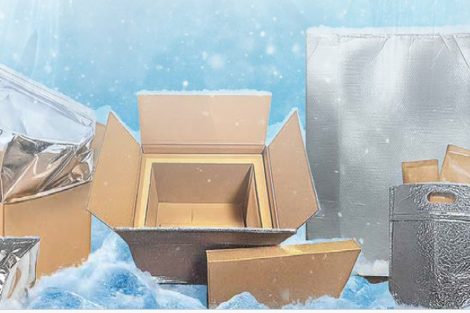
A modern packaging system requires seamless integration between boxes, labels, films and accessories. INATECH Packaging offers a full range of thermal insulation packaging, protective packaging and certified solutions for automatic or semi-automatic application.
Complete options for industrial customers:
- E-commerce packaging adapted for automated labelling, with support for water-resistant labels and barcodes
- Customisation services, equipment rental, technical support and consultancy
- More than 14 years of experience in FSC-certified packaging, with fast delivery and a wide selection of materials adapted to each industry
It can also provide solutions for products in the sports, leisure or themed events sectors – the portfolio is constantly updated according to requirements.
Sustainability and Responsibility in the Use of Self-Adhesive Labels
Growing concern for environmental protection encourages you to choose self-adhesive labels made from recyclable or certified materials. Manufacturers and distributors are looking for solutions that reduce their environmental footprint, while FSC certification or direct recyclability are becoming increasingly common selection criteria.
Access this informative guide if you want to recycle packaging and labels correctly: How to Recycle Protective Packaging
Complying with legal requirements and choosing a supplier with certified processes helps your company become a trusted partner for customers with high social responsibility standards.
Conclusions and Next Steps
If you want to increase brand visibility, improve traceability across the logistics chain or convey safety to customers, use customised self-adhesive labels integrated into your entire packaging system. INATECH Packaging offers:
- Certified solutions for every industrial sector;
- Customisation, consultancy and technical support services;
- A wide range of packaging, professional equipment and accessories.
Frequently Asked Questions about Self-Adhesive Labels
What are self-adhesive labels and what are they used for?
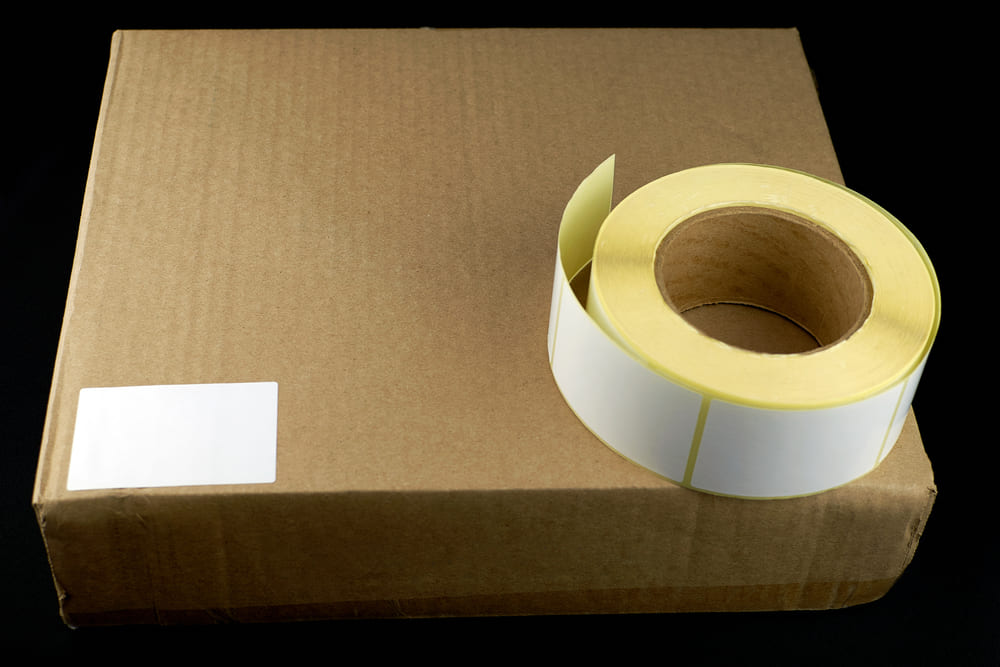
Self-adhesive labels are printed materials with adhesive on the reverse, used to identify, label and promote products. They can contain essential information such as a logo, ingredients, barcodes or usage instructions.
How can self-adhesive labels differentiate a brand from the competition?
Through customised design, attractive colours and special finishes, labels can convey a brand’s visual identity and influence the purchasing decision directly at the shelf.
What types of self-adhesive labels are available?
There are paper, plastic (PP, PE, PET), transparent, water-resistant and extreme-temperature-resistant labels, each adapted to a specific type of product.
Does the label material affect customer perception?
Yes. Premium materials and special finishes, such as matt or gloss lamination, can suggest superior quality and professionalism.
How does label design influence sales?
A clear and attractive design captures attention, communicates product benefits quickly and can increase the conversion rate on the shelf or online.
Can self-adhesive labels support a marketing strategy?
Yes. They function as tools for branding, promotion and differentiation, especially when they include memorable visual elements and well-chosen messages.
What information is mandatory on a product label?
Depending on the sector, the product name, manufacturer, ingredients, expiry date, instructions and barcode may be required.
Are customised labels suitable for small businesses?
Absolutely. Even small print runs can create a strong visual impact and help new brands appear more professional.
Do you need help choosing the right self-adhesive labels or would you like a customised solution? Contact INATECH Packaging for consultancy and quick identification of the best solution for your business.