

The Right Film for Your Product
In a company where product packaging is essential, flexible film will always be a necessity, especially for industrial applications. Product protection during transport or storage depends on the flexibility of the packaging.
The packaging industry is one of the largest industries, precisely because every manufactured product needs its own packaging. This industry is constantly developing through flexible packaging, which offers countless advantages such as extending shelf life, uniform heating, ease of use, resealing and more.
These characteristics cannot be overstated, as flexible packaging is easy to open, transport, store and even reseal. In addition, it has a satisfactory sustainability profile. It requires less energy to produce and transport, ultimately resulting in less waste, which can be recycled.
One of the greatest advantages of flexible packaging is the extended shelf life it provides for products. The shorter the shelf life (due to the packaging), the faster products deteriorate, resulting in waste. Consequently, choosing the right packaging can help you avoid these losses.
What You Should Consider
To make the right choice regarding flexible packaging, it is very important to know certain details about the product you want to package, the packaging equipment and the packaging line.
Even if you are not familiar with these aspects, do not worry! Inatech Packaging provides packaging specialists who can guide you according to your specific needs.
Here are some things you should consider:
1. What type of product do you want to package?
2. The product’s weight, shape and dimensions (considering the colour and label, can the film be printed in a way that meets your needs?)
3. How will the packaging be carried out? (Manually or automatically using equipment? What type of equipment is suitable?)
4. The products will go through several stages: production, packaging, delivery, storage/shelf display, etc. (Will they be handled frequently? What type of climate will they be exposed to? Do they require moisture/oxygen? Will they be stored safely? Etc.)
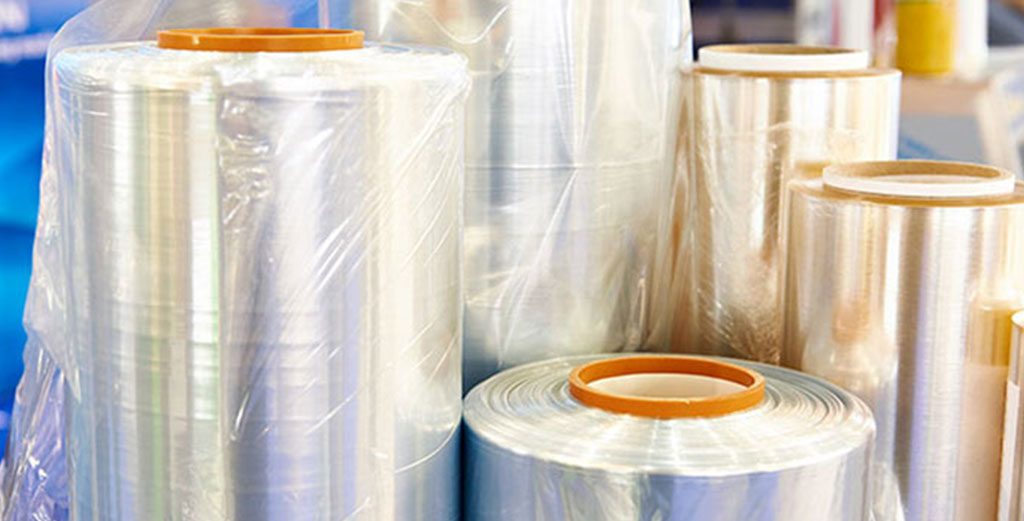
Now that we have established these details, it is time to find out which type of flexible packaging is suitable for specific products:
Polyolefin
Polyolefin is a tough, versatile material approved by the FDA as safe for use with food. Although this type of material is very thin, it is also incredibly strong. Its sealing resistance also allows products with irregular shapes to be packaged.
Polyolefin film is 100% recyclable, and your product will be clearly visible due to its transparency. This type of material can also be supplied pre-perforated for even greater flexibility, making it extremely versatile.
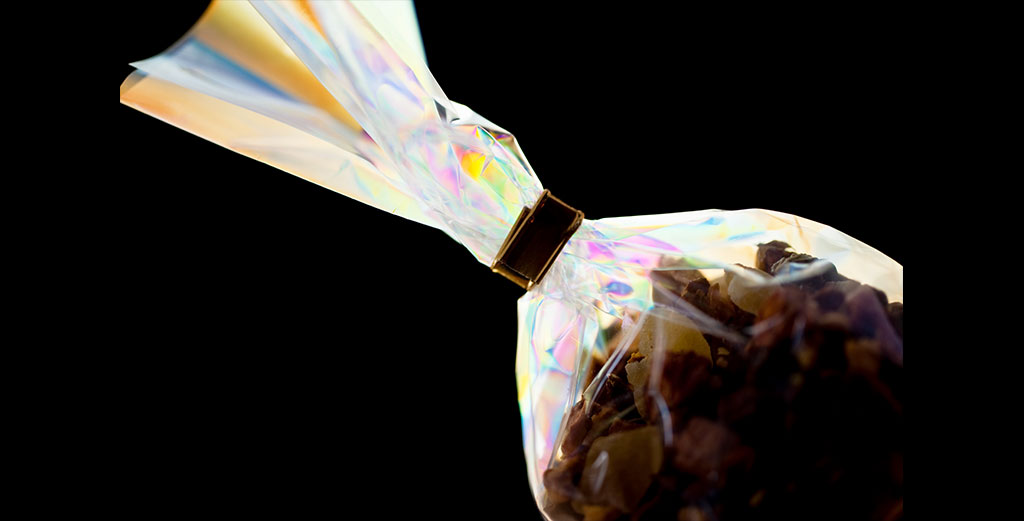
The most common products packaged in polyolefin film include toys, games, sweets, books, food and almost any item where appearance is especially important.
High-density polyethylene (HDPE)
High-density polyethylene is a thermoplastic made from petroleum. With a very high strength-to-density ratio, it is used to produce plastic bottles, corrosion-resistant pipes, geomembranes and plastic lumber.
HDPE is the most widely used plastic material because it is highly versatile. It is used for almost everything, from hats to cups, and is also widely recycled, whether in rigid or flexible form, such as bags.
It can also be used to package products on pallets. For this purpose, special rolls are manufactured that resemble netting, allowing the products to breathe and reducing the risk of deterioration.
Low-density polyethylene (LDPE)
Low-density polyethylene is similar to HDPE, but has a lower density and therefore a lower weight compared with its volume.
LDPE is resistant to impact, moisture and chemicals. Although many rigid products are made from LDPE, such as bottles, containers and caps, they can be recycled. Heat is required to manufacture certain flexible products and is also used in common sealing applications.
Polyethylene terephthalate (PET)
PET is one of the most widely used materials and is 100% recyclable. It is recognised as strong, lightweight and flexible, with excellent gas and moisture barrier properties.
Recycling this material gives it a new life. PET flakes or pellets, for example, are in high demand in the carpet industry. The most common uses of PET include bottles, jars, trays and more.
Polypropylene (PP)
Polypropylene is an addition polymer made by combining propylene monomers. This material is ideal for hot liquids because it has a high melting point. It is also excellent for applications requiring chemical resistance.
Polypropylene is used directly by the packaging industry, as well as by the electrical and equipment industries, at rates of 30% and 13%, respectively. In the automotive and household appliance industries, it is used at a rate of 10%, while in the construction materials industry it is used at a rate of 5%.
Products made from PP are varied and include plastic parts for the automotive industry, textiles, bags, packaging for consumer goods, food containers, medicine bottles and more.
Polyvinyl chloride (PVC)
PVC is a substance belonging to the category of thermoplastic materials with an amorphous structure. There are two types of PVC: the soft form, which is suitable for technical processing, and the rigid form.
Because this material is lightweight and flexible, it helps maintain the integrity of the products inside. It is much thinner than other films, but is used in numerous industries for bags, tubes, insulation, blister packaging and more.
Conclusions
There are so many options that you should not worry about failing to find the right film for your products. Before choosing the ideal packaging, it is important to research and consider your product’s requirements. Our team of packaging specialists is available whenever you need guidance in this area. For further information and advice, please contact our packaging specialists at +40 214.480.358 or [email protected]