

Types of Anti-Slip Adhesive Tapes and Their Applications – A Practical Guide to Safety in Warehouses and Production
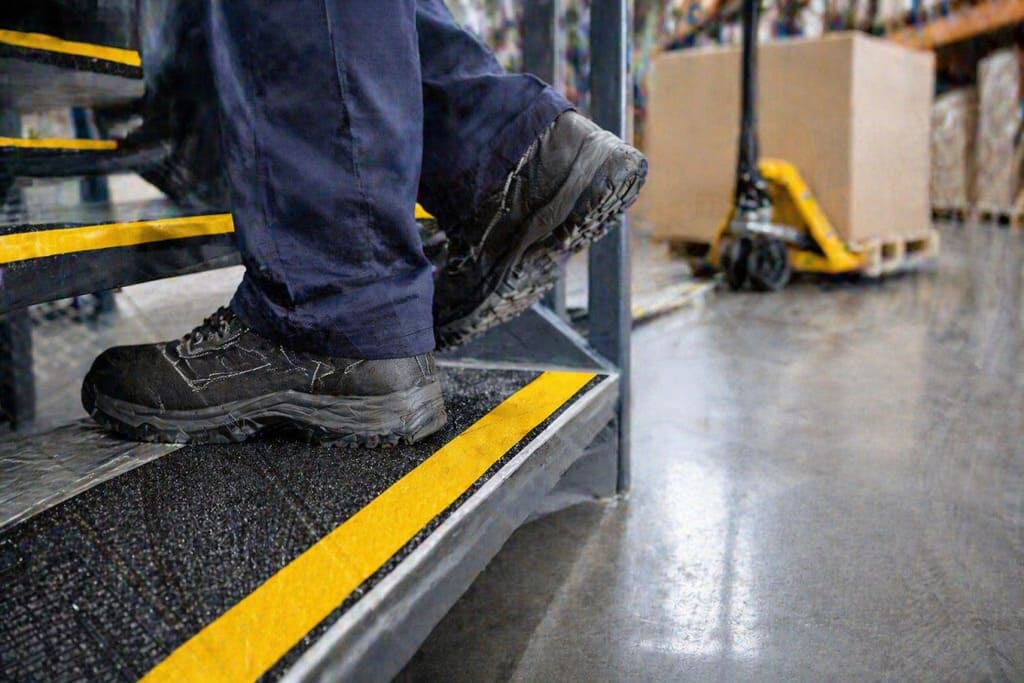
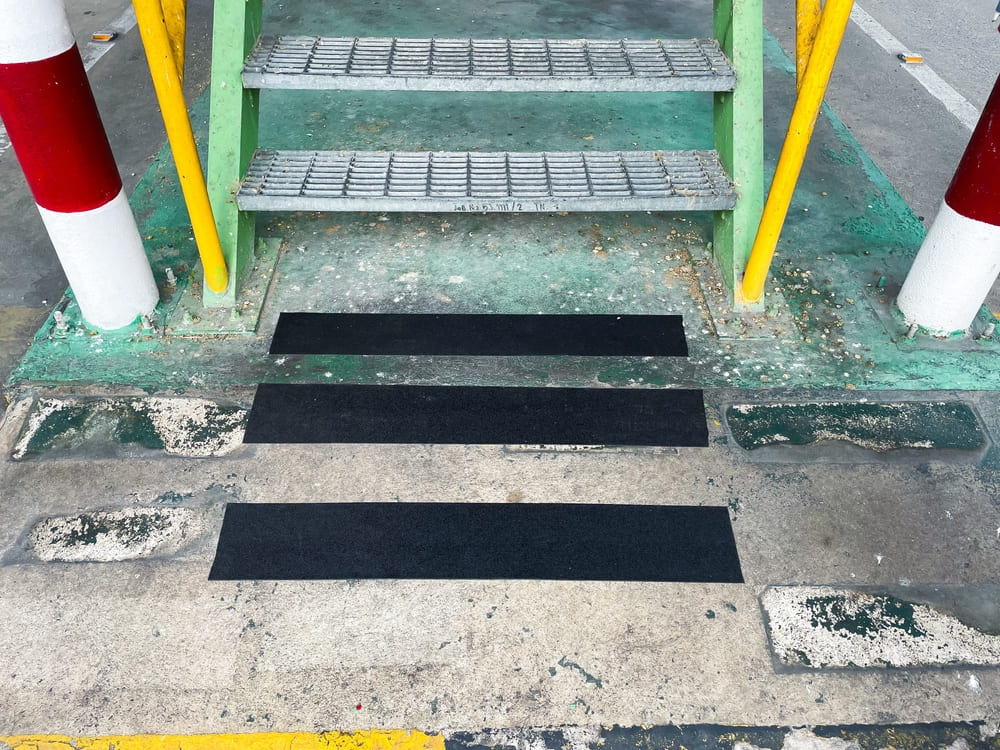
| License: Alt: Anti-slip adhesive tape used in an industrial environment |
Preventing accidents caused by slips in industrial environments depends on several well-documented technical decisions. In many factories, warehouses or production lines, a single incident can result in unnecessary costs and unwanted downtime. Choosing and correctly applying anti-slip adhesive tapes increases safety with every step, whether you work in a logistics warehouse, a packaging area or a heavily used access staircase.
Find out from the specialists at INATECH Packaging what types of anti-slip tapes are available, the advantages and limitations of each model, the materials they are made from, how to apply them correctly and the contexts in which they can be integrated effectively.
Why choose anti-slip adhesive tapes for industrial environments?
Safety in the workplace becomes easier to maintain when you use certified materials that comply with European standards and Romanian legislation. Floors exposed to moisture, oils or heavy traffic pose direct risks to personnel, equipment and goods. An anti-slip adhesive tape applied to steps, ramps or high-traffic areas quickly reduces the risk of accidents without requiring costly construction work.
In the picking area, operators move quickly from the shelves to the packaging area. An abrasive tape applied to the metal steps of a staircase helps prevent slipping even when footwear has traces of liquid or dust on it. Installing adhesive tape does not alter the structure of the surface or prevent subsequent cleaning. This helps you optimise the workflow in your warehouse and ensure workplace safety.
Types of anti-slip adhesive tapes
There are several types of anti-slip tapes, adapted to different traffic levels, surfaces and hygiene or resistance requirements. Below are the most commonly used options and their practical characteristics:
1. Abrasive anti-slip tape
Made from mineral particles or abrasive elements, usually incorporated into a PVC or polyester layer, abrasive tape provides maximum grip on metal, concrete or composite surfaces. It is often used in industrial environments, on loading ramps, warehouse stairs, areas with machinery or high-traffic walkways.
Main advantages:
- Provides excellent grip on wet or dry surfaces;
- Withstands heavy traffic, including pallet truck or manual pallet jack traffic;
- Easy to clean with standard chemical solutions.
Limitations:
- The surface may cause discomfort if people walk barefoot;
- If the tape is exposed to excessive abrasive dust, its service life is reduced.
2. Non-abrasive tape for sensitive areas
In medical centres, swimming pools, changing rooms or areas where people walk without footwear, you need a solution that provides grip without irritating the skin. Rubberised tapes with an anti-slip profile do not contain rough particles. The surface remains soft and suitable for leisure or sports areas.
Main advantages:
- High comfort for barefoot traffic;
- Easy maintenance; does not retain persistent dirt;
- Recommended for environments with high humidity.
Limitations:
- Does not withstand the use of heavy equipment or industrial boots;
- Long-term resistance decreases in areas with sustained industrial traffic.
3. Fluorescent and phosphorescent tapes
These adhesive tapes combine anti-slip performance with visual signalling. They stand out at night or in emergencies when lighting systems are not working. This type of tape indicates both the direction towards the emergency exit and the edges of steps or platforms.
Main advantages:
- Improves visibility in poorly lit areas;
- Provides the optical warning required during evacuation scenarios.
Limitations:
- The phosphorescent effect requires charging with natural or artificial light;
- Higher costs compared with standard strips.
4. Outdoor tape resistant to weather conditions
If you need to protect areas such as outdoor ramps, loading platforms or stairs in the company yard, use tape designed to withstand rain, UV rays, frost and wide temperature cycles. The backing material does not peel or deform over time.
Main advantages:
- Resistant to moisture, sunlight, frost and temperature fluctuations;
- Examples: high-traffic car parks, outdoor pedestrian bridges and industrial platforms.
Limitations:
- The adhesive achieves optimum bonding at temperatures above zero degrees Celsius;
- Review its condition periodically according to the degree of wear.
5. Transparent tapes
If you want to maintain the architectural appearance or original branding of a staircase, transparent anti-slip tape leaves the surface visible while improving safety. It is commonly used on glass, ceramic, stainless-steel or lacquered steps in shop reception areas.
Main advantages:
- Does not alter the appearance of the surface;
- Also suitable for showrooms or premium-design spaces.
Limitations:
- Dirt is clearly visible and careful cleaning is required.
How to choose the right anti-slip adhesive tape
The right choice requires you to consider the long-term use and the environment in which you will apply the product. You can follow these steps when analysing the context:
- Assess the surface: Check whether it is wood, concrete, metal, tile, plastic or glass;
- Estimate the traffic level: Tape for a main access staircase will have higher requirements than tape for an office area;
- Consider the working environment: Is water, oil or abrasive dust frequently present? These details influence your choice;
- Check aesthetic and branding requirements: If appearance matters, choose transparent or specially designed options;
- Comply with hygiene and cleaning requirements: In food-processing or medical areas, choose easy-to-clean options that do not retain dirt.
For other protective or packaging products, INATECH Packaging also provides corrosion protection packaging, as well as resources for logistics and warehousing, helping you optimise operational workflows.
Practical guide: How to apply anti-slip adhesive tape – 5 steps to follow
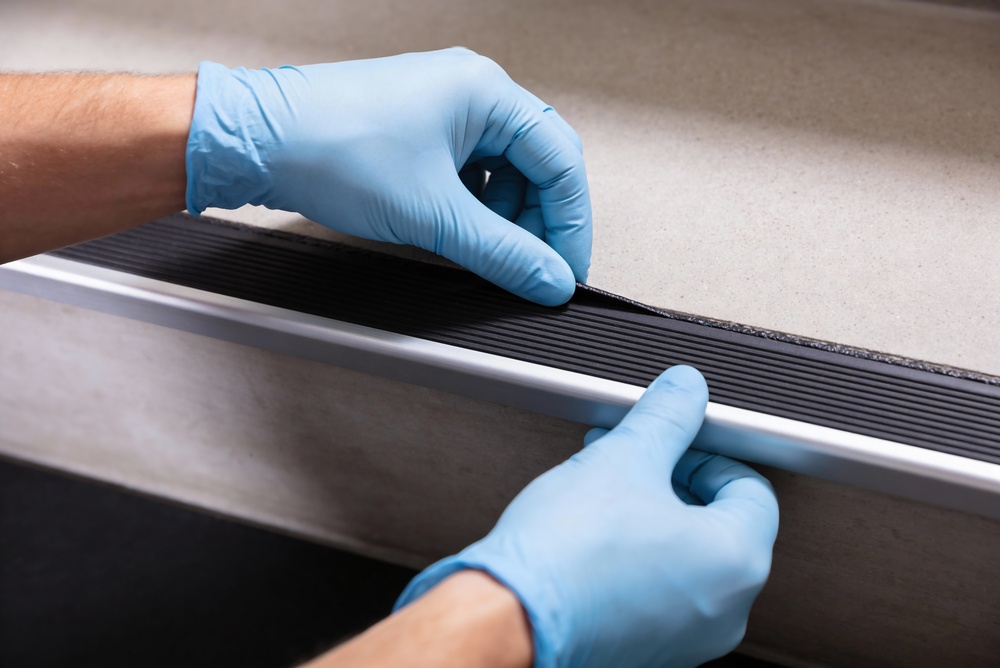
- Prepare the surface: Clean the area thoroughly and remove dust, oil, grease or old paint marks. If you notice cracks or uneven areas, repair them before application. The surface must be completely dry.
- Cut the tape to the correct size: Use scissors or a utility knife to adjust the length. Leave a small gap from the edge of the step – a few millimetres help prevent accidental lifting.
- Apply progressively: Gradually peel away the release liner and carefully fix the tape, starting at one end. Smooth it down section by section to prevent air from becoming trapped underneath. This method ensures optimum adhesion.
- Press firmly: Using a sturdy roller or your hand, press across the entire surface of the tape. Avoid touching the adhesive section with your hand so you do not reduce its performance.
- Allow the tape to bond completely: Do not use the area for at least 12 hours after application. Low temperatures require a longer setting time. Follow the manufacturer’s recommendations, especially for outdoor installation.
Advantages and limitations of anti-slip adhesive tapes
Advantages:
- Fast installation without structural modifications
- Favourable cost-benefit ratio compared with permanent coatings
- Available in different sizes, colours and levels of roughness
- Products certified for industrial use in accordance with ISO and EN standards
Limitations:
- Service life may be affected in areas with dust, sand or harsh chemicals
- Inspect the tapes periodically and replace them where you notice wear
- Some models may be too harsh for certain types of boots or special applications
Examples of integration into industrial and logistics operations
You can apply anti-slip tapes to:
- Metal stairs, work surfaces or floors in high-traffic areas;
- Loading ramps in warehouses or car parks for light equipment;
- Packaging areas, next to palletising platforms or conveyor belts;
- Internal walkways and access routes to cold rooms or production rooms.
If your goods pallets have vulnerable corners, you can protect them using cardboard edge protectors. This solution increases stability during transport and integrates quickly into the packaging process.
Monitoring and maintenance for consistent safety
Make sure the tapes remain effective:
- Inspect them monthly, especially in areas exposed to oils, water or direct loads.
- Replace tapes where you notice significant wear or lifting along the edges.
- Consider supplementing them with other solutions, such as anti-slip mats or epoxy treatments, where traffic or hygiene requirements exceed the usual standard.
You can find additional suggestions in the guide to choosing the best packaging solutions, a useful resource for any warehouse manager or occupational health and safety officer.
Frequently asked questions about INATECH Packaging anti-slip adhesive tapes
What are anti-slip adhesive tapes?
Anti-slip adhesive tapes are special self-adhesive materials applied to surfaces to prevent slipping and workplace accidents.
Where are anti-slip tapes most commonly used?
They are used in warehouses, production halls, loading ramps, staircases, metal platforms and high-traffic areas.
What types of anti-slip adhesive tapes are available?
There are standard abrasive tapes, photoluminescent tapes, reflective tapes, oil-resistant tapes and tapes for wet environments.
What is the difference between abrasive and photoluminescent tapes?
Abrasive tapes provide mechanical grip, while photoluminescent tapes ensure visibility in the dark in addition to their anti-slip effect.
How do I choose the right tape for a warehouse?
The choice depends on the type of surface, traffic level and exposure to moisture, oils or chemicals.
What surfaces can anti-slip tapes be applied to?
They can be applied to concrete, metal, wood, tile, epoxy or painted surfaces, provided they are clean and degreased.
How are anti-slip adhesive tapes applied correctly?
The surface must be cleaned, dried and degreased, after which the tape is applied with even pressure, without air bubbles.
Is special surface preparation required?
Yes, preparation is essential: cleaning, degreasing and, where necessary, light sanding for maximum adhesion.
How resistant are anti-slip tapes?
Professional tapes are resistant to heavy traffic, varying temperatures, water, oil and chemicals.
How long does it take to apply the tapes in an industrial environment?
Application is quick and depends on the surface, but it can generally be completed within a few hours.
Can the tapes be removed or replaced?
Yes, the tapes can be removed by applying gentle heat and cleaning away the remaining adhesive.
Do anti-slip tapes help meet safety regulations?
Yes, they help prevent accidents and support compliance with occupational health and safety regulations.
By working with INATECH Packaging, you benefit from:
- Anti-slip adhesive tapes in various types, sizes and specifications;
- Thermal insulation packaging, e-commerce packaging, eco-friendly solutions and industrial protection products;
- Systems for professional packaging, sealing, automatic wrapping and warehousing;
- Packaging and tape customisation services, including configuration and branding;
- Technical consultancy, equipment rental and complete support from product selection to delivery.
INATECH Packaging delivers quickly anywhere in the country, has more than 14 years of experience and guarantees FSC-certified products. Any business, regardless of size or industry, can choose tailored, durable and easy-to-manage solutions. Request details about packaging customisation or the ability to develop special solutions, including for non-industrial requirements.