

What Are Desiccants and Why Are They Important in the Logistics Chain?
What Are Desiccants?
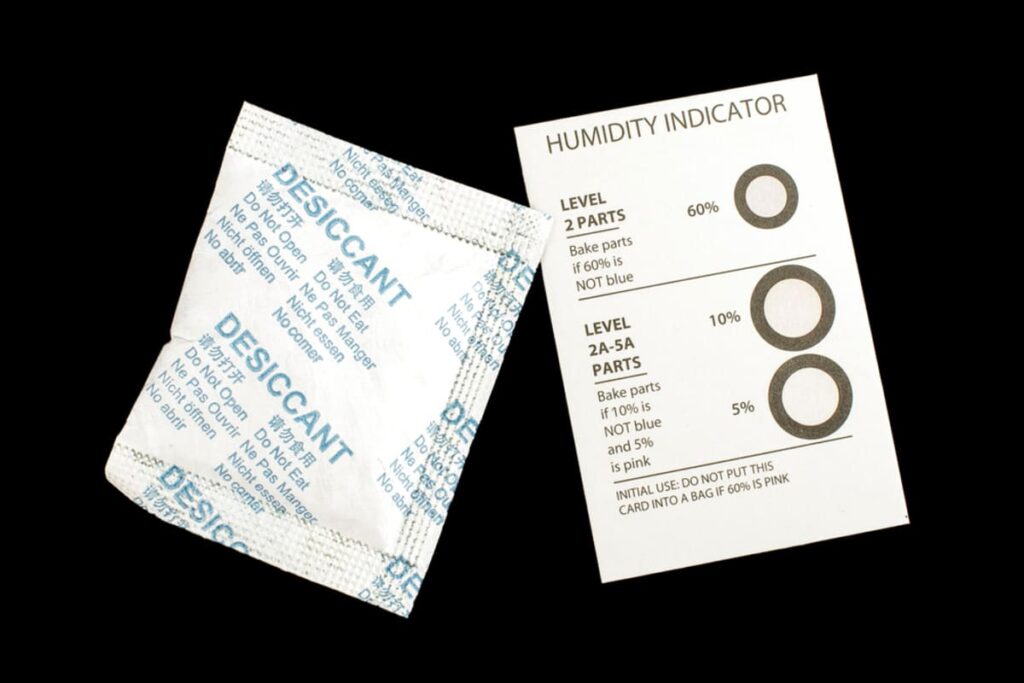
What is a desiccant? Container desiccants are materials specially designed to absorb moisture from the air or surrounding environment, thereby helping maintain a dry and stable environment. They can be solid (granules, sachets), liquid or gel-based, with silica gel being the most common type. This absorption capacity makes desiccants an indispensable solution for protecting moisture-sensitive products.
Silica gel desiccant is a porous substance made from amorphous silicon dioxide that can absorb large amounts of water without dissolving. Although its name contains “gel”, it is actually a solid substance with a granular appearance or the form of small beads. Due to its structure, silica gel can retain moisture effectively without changing its shape or composition.
These materials are used to control humidity in packaging, warehouses or containers, preventing the negative effects that moisture can cause. Each industry can adapt the type and quantity of desiccant according to the specific requirements of its products.
Besides silica gel, other desiccants are also used in industry, such as calcium chloride, kaolin or zeolites, each with specific properties and applications. The choice of desiccant depends on the ambient conditions, product type and required moisture absorption capacity.
Therefore, an in-depth understanding of the characteristics of each type of desiccant is crucial for optimum protection.
Why Are Desiccants Essential in the Logistics Chain?
The logistics chain comprises all the processes through which a product passes from the manufacturer to the consumer. This journey can include several stages: manufacturing, packaging, storage, transport and delivery. At each of these stages, the product is exposed to variable external conditions, with humidity playing a particularly important role. Each stage of the logistics chain requires specific measures to prevent product damage.
Excessive humidity in packaging or storage areas can cause multiple problems, such as mould growth, metal corrosion, packaging degradation and, consequently, the loss of product quality or functionality. Therefore, using desiccants becomes an essential measure for ensuring product integrity. In addition, container desiccants can help reduce costs caused by losses resulting from damage.
Discover useful things you can do with silica gel sachets!
Protecting Products from Moisture
Moisture is one of the greatest enemies of stored and transported products. Particularly in the case of sensitive products, such as electronic equipment, dry foods, medicines or metal parts, the presence of water can lead to irreversible damage. Without adequate protection, the economic and reputational losses can be significant.
For example, in a packet of biscuits or snacks, moisture can soften the product, making it unfit for consumption. In the case of electronic products, condensation can cause short circuits or corrosion on internal components. Thus, desiccants protect both the physical quality and the functionality of products.
Desiccants help absorb water vapour from the air, thereby maintaining a dry environment that prevents this damage. This protection is valuable not only during transport, but also for long-term storage. It is important to use desiccants in airtight packaging to ensure maximum effectiveness.
Preventing Damage During Transport
Transporting products is a complex process and is often exposed to varying temperature and humidity conditions. For example, during maritime transport, particularly in containers, temperature fluctuations can cause condensation that affects the cargo. Therefore, using desiccants is standard practice in many industries with international logistics chains.
Without desiccants, condensation would settle on the surface of products, causing corrosion, mould or other forms of degradation. Thus, desiccants help preserve product integrity regardless of harsh transport conditions.
Although the environment is relatively controlled during air transport, rapid changes in temperature and pressure can still generate moisture, and desiccants help prevent related problems. They provide additional protection against risks that cannot be completely eliminated through other methods.
Extending the Shelf Life of Stored Products
Storing products for long periods requires optimum conditions to preserve their quality. Moisture can accelerate chemical or biological degradation processes. By maintaining a dry environment, desiccants help extend the shelf life of products.
Pharmaceutical products, for example, can lose their effectiveness if exposed to high humidity levels. Electronic equipment can also deteriorate over time, while dry foods can develop mould or attract insects. Without desiccants, the risks of contamination and degradation are significantly higher.
Using desiccants in VCI packaging, desiccants and emitters and warehouses helps prevent these problems, keeping products in optimum condition even after months or years of storage. This is an important investment in product quality and customer satisfaction.
Practical Applications of Desiccants in Logistics

Desiccants have a wide range of applications across various industries due to their moisture absorption properties. Each field benefits from the customised use of desiccants according to the specific characteristics of its products.
In the Food Industry
In the food industry, maintaining product freshness and quality is essential. Desiccants are used when packaging dry foods such as biscuits, cereals, spices or nutritional supplements to prevent softening and spoilage. In this way, desiccants help manufacturers ensure a high standard of quality and food safety.
They help prevent condensation, which can cause mould or organoleptic deterioration (taste, smell and texture) in food. They also extend shelf life, reducing losses and food waste. Responsible consumption and waste reduction are therefore supported by the use of desiccants.
In the Pharmaceutical Industry
Pharmaceutical products have very strict storage requirements because moisture can alter the chemical composition of medicines, reducing their effectiveness or safety. The use of desiccants in this industry is regulated and carefully monitored.
Silica gel desiccants are used in sachets inside packaging to maintain a dry environment and prevent medicines from degrading, particularly medicines in powder, tablet or capsule form. This practice directly contributes to patient health and safety.
In Electronics and Sensitive Equipment
Electronic equipment is particularly vulnerable to the effects of moisture. Printed circuits, connectors and internal components can corrode, leading to equipment failure. Manufacturers use desiccants as an integral part of their packaging to extend the service life of their products.
To avoid these problems, desiccants are included in packaging for mobile phones, laptops, cameras, measuring instruments and other sensitive equipment. This gives customers confidence in the quality and durability of the products they purchase.
In Maritime and Air Transport
Maritime and air transport involve harsh environmental conditions, with significant variations in temperature and pressure. Cargo containers, especially airtight ones, can accumulate water vapour due to condensation, affecting the cargo. Under these conditions, desiccant protection is a key element of the logistics chain.
Using desiccants reduces the risk of mould, corrosion or product damage, ensuring that goods are delivered in perfect condition even after long journeys. This enables companies to maintain high quality standards regardless of the distance or mode of transport.
How Should Desiccants Be Used Correctly in Packaging and Storage?
For desiccants to be effective, several rules must be followed when using them:
Correct application is essential for maximising the benefits of desiccants.
-
Choosing the Right Type of Desiccant: not all desiccants are suitable for every type of product. For example, calcium chloride is highly effective at absorbing moisture, but it cannot be used with products that can be easily contaminated. Consulting industry specialists helps in selecting the most suitable desiccant;
-
Correct Dosage: the quantity of desiccant must be proportional to the volume of the space and the product’s sensitivity to moisture. An insufficient dose will reduce effectiveness, while an excessive dose may be unnecessary or costly. Accurately determining requirements optimises costs and performance;
-
Airtight Packaging: desiccants work best in well-sealed packaging that prevents humid air from entering from outside. Without airtight packaging, desiccant effectiveness decreases drastically;
-
Monitoring: in some cases, desiccants can become “saturated” with water and must be replaced or reactivated, for example through thermal drying. Maintenance procedures extend their service life and effectiveness;
-
Positioning: desiccants should be placed close to the product, but without contaminating it, so that they can efficiently absorb moisture from the packaging. Strategic positioning maximises the effectiveness of the protection.
What is a desiccant and why is it so important? Desiccants are an essential component of the modern logistics chain, protecting products from the harmful effects of moisture. Whether in the food or pharmaceutical industry, electronic equipment or maritime transport, desiccants help maintain product quality and durability. Investing in high-quality desiccants is a smart strategy for any business that wants to keep its products intact and satisfy its customers.
Correctly using desiccants, choosing the right type and applying the appropriate dosage can make the difference between a damaged product and one delivered in perfect condition. For effective and varied desiccant solutions, visit Inatech Shop. Never underestimate the impact that a simple desiccant sachet can have on product integrity.