

What You Need to Know About Corrugated Cardboard Boxes
Corrugated cardboard boxes are among the most widely used types of packaging, thanks to their strength and low cost. They are the ideal solution for companies that package products every day, online shops, logistics warehouses and household use. A properly made box can protect fragile items, support heavy loads and be customized for almost any type of product. INATECH Packaging specialists explain in detail what corrugated cardboard is, how it is manufactured, what benefits it offers, what types of cardboard boxes are available and how to choose the right models.
What Is Corrugated Cardboard and How Is It Structured?
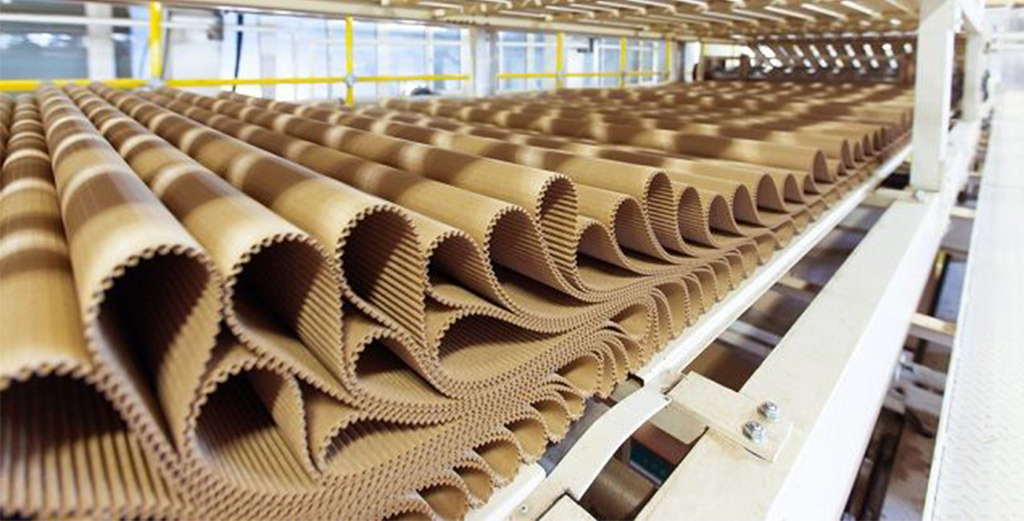
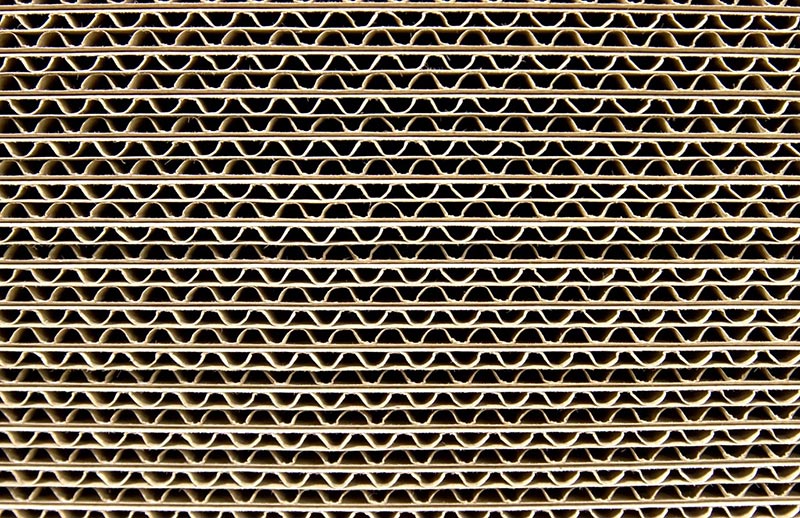
Corrugated cardboard is a material made up of three or more layers of paper. Its core consists of a corrugated sheet, also known as the “flute” or “medium”, positioned between two flat layers of kraft paper or testliner. This structure gives it rigidity and a high capacity to absorb shocks. The more layers it has, the stronger the cardboard becomes and the more suitable it is for bulky or heavy products.
Why the Corrugated Medium Is Important
The corrugated sheet inside creates the space between the two flat layers, acting as a natural vibration absorber. Thanks to its wave-like shape, it distributes pressure efficiently across the entire surface of the box, significantly reducing the risk of deformation and product damage. At the same time, this medium provides excellent stacking strength, which is essential for professional transport and storage.
Cardboard Thickness and Flute Types
The flute can have different heights and densities (A, B, C, E etc.), each serving a specific purpose:
- large flute (A) – provides good cushioning, ideal for fragile products;
- medium flute (C) – the most widely used, offering the perfect balance between strength and cost;
- small flute (B) – good rigidity, suitable for stacking;
- very small flute (E) – suitable for small boxes, attractive packaging and printing.
Combining several flute types in the same box increases structural performance, for example C+B double-wall boxes.
How Corrugated Cardboard Boxes Are Manufactured
The manufacture of corrugated cardboard is a complex technical process carried out using high-performance industrial machinery. It all starts with rolls of Kraft or Testliner paper, which undergo a corrugation process.
Stage 1 – Creating the Corrugated Sheet
The paper intended for the flute is heated with steam to make it flexible, then passes between corrugated-profile rollers, which transform it into the characteristic medium. After corrugation, the medium is coated with adhesive and bonded to the first outer layer.
Stage 2 – Forming the Cardboard Sheet
Once the corrugated layer is secured to the first flat sheet, adhesive is applied to the other side of the flutes and the second outer layer is bonded. The sheet is then pressed and dried, producing corrugated cardboard ready for processing.
Stage 3 – Cutting, Creasing and Forming
The cardboard sheet is cut to the required dimensions, then machinery creases it, creating folding lines, and turns it into boxes. The following can be added:
- closing slots;
- handles;
- special gluing areas;
- perforations;
- digital or flexographic printing for customization.
Advantages of Corrugated Cardboard Boxes
Here are the main benefits of corrugated cardboard packaging:
High Strength and Excellent Protection
The multilayer structure allows the box to withstand pressure, mechanical shocks and vibrations. In particular, fluted cardboard is used to transport fragile items, electronics, glass and ceramics, as well as heavy goods such as automotive components and industrial equipment.
Low Weight – Lower Logistics Costs
Corrugated cardboard is strong but surprisingly lightweight. As a result, transport costs are reduced and handling becomes easier. For e-commerce companies that ship dozens or hundreds of parcels every day, this advantage is essential.
Available in a Wide Range of Models
Boxes can have:
- one, two or three walls;
- various shapes and closures;
- internal inserts;
- special walls for extra protection;
- complete graphic customization with the company logo.
This level of adaptability makes them suitable for almost any industry.
Recyclable and Eco-Friendly Material
Corrugated cardboard is biodegradable and recycled at a very high rate. Choosing this eco-friendly cardboard packaging helps reduce plastic consumption and actively contributes to environmental protection. More and more companies are including sustainable packaging in their strategies, and corrugated cardboard is the ideal choice for this objective.
Low Production Costs
Compared with other materials, corrugated cardboard is cost-effective because it:
- requires fewer resources;
- can be produced in large volumes;
- is easy to store;
- requires minimal investment in additional equipment.
As a result, the final cost per box remains low, even for customized models.
Types of Corrugated Cardboard Boxes
Boxes are classified according to the number of layers, closing method or intended use.
Single-Wall Boxes
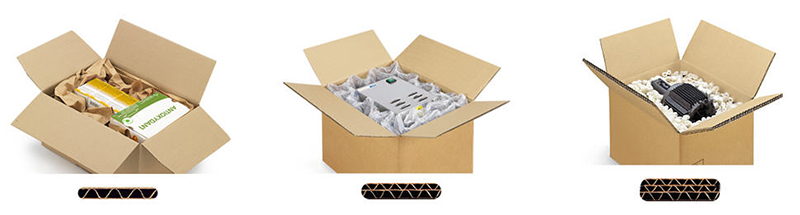
They consist of a single sheet of corrugated cardboard and are ideal for lightweight, non-fragile products. They are the most widespread solution in online commerce.
Double-Wall Boxes
They consist of two corrugated layers bonded between three flat layers. They offer much greater strength and are suitable for fragile products, electronics and bulky items.
Triple-Wall Boxes
They provide maximum protection and can even replace wooden boxes in certain situations. They are used for industrial equipment, automotive parts, machinery and other heavy goods.
Customized Special Boxes
These are made to the product’s exact dimensions and can include:
- protective inserts;
- internal compartments;
- cut-outs;
- windows;
- handles;
- advanced colour printing.
They are ideal for online shops, premium packaging and the food industry.
| Flute / Cardboard Type | Description | Main Features | Recommended Use by INATECH Packaging |
|---|---|---|---|
| Flute A | High-flute corrugation | Excellent cushioning, shock protection, less rigid | Fragile products, sensitive items, bulky packaging |
| Flute B | Lower-flute corrugation | Good rigidity, stacking strength | Standard boxes, regular parcels, medium-sized products |
| Flute C | Medium flute, most widely used | Perfect balance between protection and rigidity | Most standard and industrial packaging |
| Flute E | Thin flute, microflute | Professional appearance, lightweight, ideal for printing | Premium packaging, small boxes, retail |
| Flute F | Very thin microflute | High-quality finish, suitable for detailed graphics | Cosmetic packaging, small electronics |
| Single-Wall (1 wall) | Single corrugated layer | Lightweight, economical, standard protection | Light and medium-weight products, e-commerce |
| Double-Wall (2 walls) | Two corrugated layers | High strength, increased rigidity | Fragile, heavy and bulky products |
| Triple-Wall (3 walls) | Three corrugated layers | Very high strength, sometimes replaces wooden boxes | Industrial products, equipment, heavy goods |
In practice, CO3 cardboard boxes, with a single corrugated wall, are used for lightweight or small products (see an example of CO3 here), while CO5 boxes, with two corrugated core layers, are suitable for heavy or fragile goods (CO5 example).
How to Choose the Right Corrugated Cardboard Box
Choosing the right box is essential for product safety and cost optimization.
Identify the Weight and Fragility of the Products
A fragile or heavy product requires double- or triple-wall boxes. A lightweight product can be packed in a standard box, avoiding unnecessary costs.
Choose the Correct Size
The box must allow the product to be held securely, without excessive empty space.
An oversized box:
- allows the product to move;
- increases the risk of damage;
- increases transport costs.
A box that is too small may put pressure on the product or expose it to shocks.
Consider the Transport Method
For road or international transport, resistance to vibrations and stacking becomes essential. In these cases, multi-wall boxes are recommended.
Check the Storage Conditions
In warehouses with high humidity, high-quality cardboard, possibly specially treated, is recommended to prevent loss of rigidity.
Frequently Asked Questions About Corrugated Cardboard Boxes
What Are Corrugated Cardboard Boxes?
Corrugated cardboard boxes are packages made from a sheet consisting of layers of paper, including an inner corrugated layer that provides increased strength. They are used to transport, store and protect various types of products.
What Types of Corrugated Cardboard Are Available?
The most common types are:
- single-wall cardboard;
- double-wall cardboard;
- triple-wall cardboard.
Each type provides a different level of strength and protection, depending on the weight and fragility of the product.
What Products Are Corrugated Cardboard Boxes Suitable For?
These boxes are suitable for fragile products, electronics, textiles, cosmetics, food products, bulky or heavy items and parcels shipped by courier. In practice, they can be adapted to any industry.
Are Corrugated Cardboard Boxes Suitable for Long-Distance Transport?
Yes. Thanks to their strong structure and shock-absorbing capacity, corrugated cardboard boxes protect products transported over long distances very effectively, including under vibration and stacking conditions.
What Cardboard Thickness Should I Choose for My Products?
For lightweight products, single-wall boxes are sufficient. For fragile or medium-weight products, double-wall boxes are recommended. For very heavy or industrial products, triple-wall cardboard is recommended.
Can Corrugated Cardboard Boxes Be Customized?
Yes. Boxes can be customized according to their dimensions, thickness, shape and graphics. Logos, brand information, instructions or full-colour images can be printed.
Are Corrugated Cardboard Boxes Eco-Friendly?
Yes. Corrugated cardboard is recyclable, biodegradable and made largely from recycled materials. It is considered one of the most eco-friendly packaging materials.
How Can I Store Corrugated Cardboard Boxes Correctly?
Boxes should be kept in a dry place, away from humidity and direct sunlight. They should be stored on pallets or shelves, not directly on the floor, to prevent deformation.
Are Corrugated Cardboard Boxes Resistant to Humidity?
In their standard form, corrugated cardboard boxes are not resistant to water or high humidity. However, specially treated versions are available for better performance in damp environments, and additional films can be used for protection.
Can Corrugated Cardboard Boxes Be Reused?
Yes, as long as the box structure remains intact. Boxes can be reused for storage, moving or transport, helping to reduce waste.
Corrugated cardboard boxes are one of the most efficient, reliable and sustainable packaging solutions available. For complex projects, seek advice from packaging specialists or experienced designers. Contact INATECH Packaging specialists for recommendations regarding purchasing decisions, box recycling and selecting the optimal material for your business.